How Smart Office Interior Design Increases Employee Productivity and Business Growth
Most business owners spend months planning strategy, hiring talent, and investing in technology — but overlook one powerful growth driver sitting right in front of them every day: their office environment.
At Dimensional Architects, we’ve worked with companies across industries and seen one consistent truth — office interior design directly affects how people think, feel, and perform. A poorly planned office drains energy. A smartly designed workspace fuels focus, efficiency, and business growth.
Your office isn’t just a place people sit. It’s a tool that shapes behavior, productivity, and even profits.
The Link Between Workspace and Human Behavior
People don’t work in isolation from their environment. The layout of a room, the lighting overhead, background noise, and even how easily someone can move around — all of it influences mood and performance.
In many projects handled by Dimensional Architects, we’ve noticed that employees working in cramped, dark, or noisy environments show faster fatigue and lower concentration. On the other hand, thoughtfully designed offices encourage:
- Better focus
- Reduced stress
- Higher engagement
- Smoother communication
This is why smart office design is not about decoration — it’s about understanding how humans function throughout the workday.
Smart Design Elements That Boost Productivity
A productive workspace is built with intention. Here are practical elements we prioritize in commercial interior design projects.
1. Strategic Space Planning
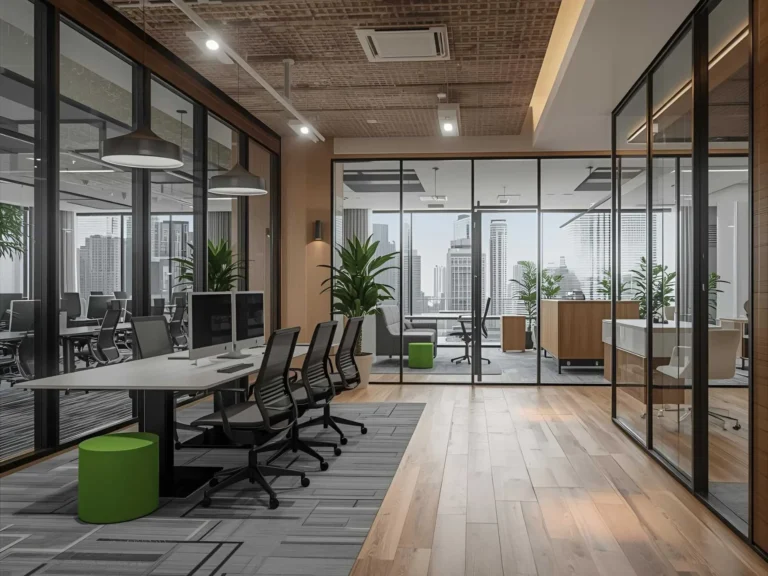
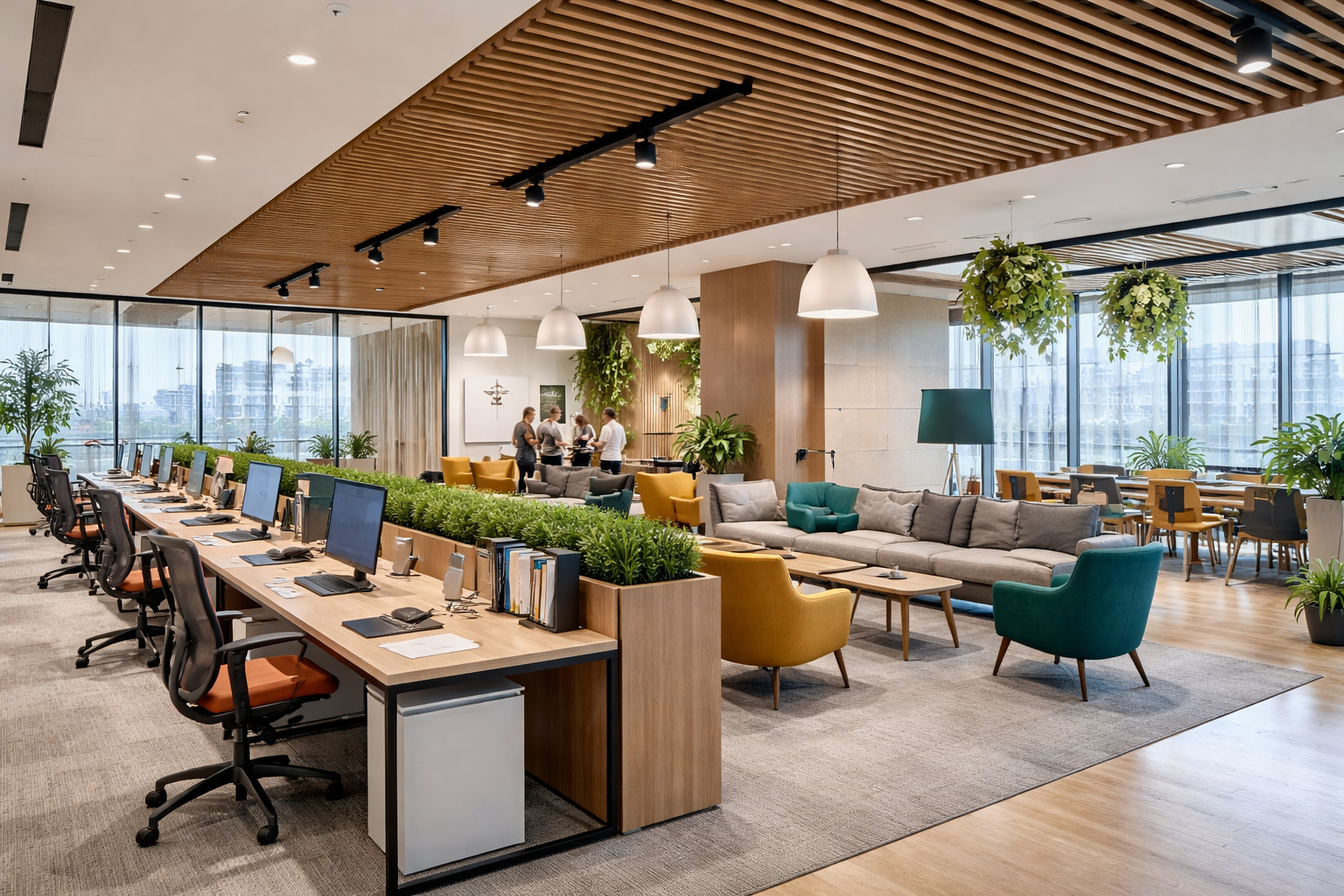
Good office interior design starts with how space flows. Overcrowded desks and awkward layouts slow down work.
We design layouts that:
- Reduce unnecessary movement
- Create clear work zones
- Balance collaboration with quiet areas
In a recent project near BKC, Mumbai, restructuring the layout alone reduced internal disruptions and improved team efficiency.
2. Natural & Artificial Lighting
Lighting affects energy levels more than most people realize.
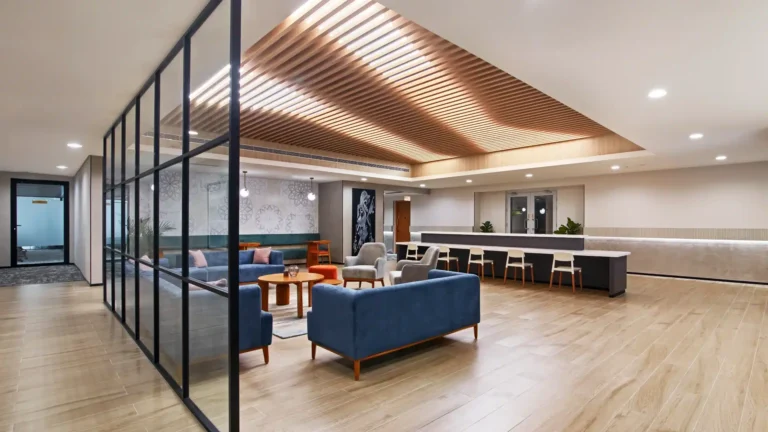
Natural light improves mood and alertness, while layered artificial lighting prevents eye strain. We use a mix of ambient, task, and accent lighting to create a balanced environment that supports workspace productivity throughout the day.
3. Ergonomic Furniture
Back pain and discomfort silently reduce performance. Ergonomic chairs, correct desk heights, and posture-friendly setups make a huge difference.
At Dimensional Architects, we see ergonomics as a productivity investment — not an expense.
4. Acoustics & Noise Control
Noise is one of the biggest productivity killers. Hard surfaces cause sound to bounce, increasing distraction.
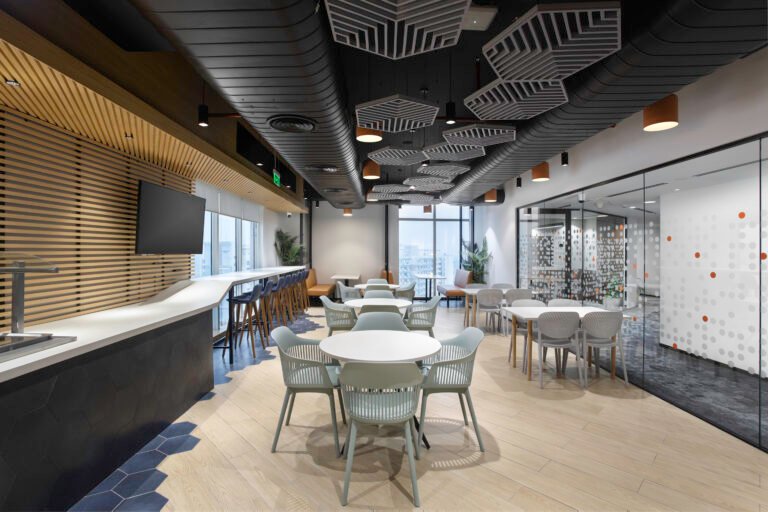
We use acoustic panels, soft materials, and zoning strategies so employees can concentrate without constant disturbance — a key aspect of smart office design.
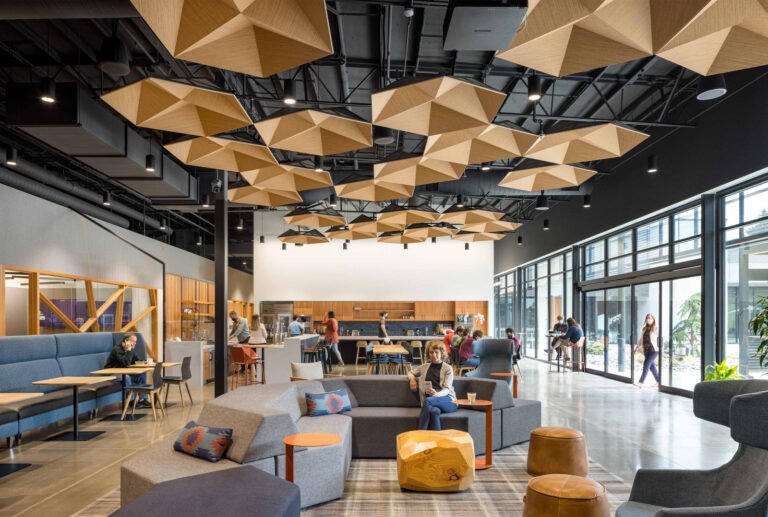
5. Breakout & Collaboration Zones
Not all work happens at desks. Creative discussions need informal spaces.
Breakout areas help teams recharge, think freely, and collaborate naturally. These zones often lead to better ideas and faster problem-solving.
6. Storage & Clutter Control
Visual clutter increases mental clutter. Smart storage keeps workstations clean, which directly improves clarity and focus.
How Office Design Impacts Business Growth
Office design doesn’t just influence employees — it shapes how the world sees your company.
Employee Retention
A comfortable and inspiring workspace reduces burnout and increases loyalty.
Client Impressions
Your office tells clients who you are before you speak. A well-designed space builds trust and credibility instantly.
Brand Perception
Your interiors should reflect your company values, professionalism, and vision.
Team Performance
When people feel good in their environment, they perform better — and that drives revenue.
This is why businesses investing in office design in Mumbai are seeing tangible long-term returns.
Common Mistakes Businesses Make in Office Design
From our experience at Dimensional Architects, these are frequent issues:
- Prioritizing looks over functionality
- Ignoring lighting and acoustics
- Overcrowding the workspace
- Copying trends without considering team needs
- Not planning for future growth
Design should support people first — aesthetics follow.
How Dimensional Architects Approaches Smart Office Design
Our process is practical and human-centered.
We begin by understanding how your team works, where bottlenecks occur, and what your business goals are. Then we create a commercial interior design strategy that blends:
- Efficient layouts
- Productivity-focused lighting
- Comfort-driven furniture
- Acoustic balance
- Brand-aligned aesthetics
Every decision is intentional. Every design element has a purpose.
That’s what makes Dimensional Architects different — we design offices that work as hard as the people inside them.
Conclusion: Your Office Is a Growth Tool
If your workspace isn’t helping your team perform better, it may be holding your business back.
Smart office interior design improves morale, focus, collaboration, and brand image — all of which contribute directly to business growth.
At Dimensional Architects, we believe your office should be more than a space. It should be a performance engine for your company.
Maybe it’s time to stop seeing your office as an expense — and start seeing it as an investment in growth.