The Psychology Behind Great Coworking Space Design
Walk into a thoughtfully designed coworking space and you feel it instantly. The energy feels balanced. Conversations flow naturally. People seem focused, comfortable, and motivated to work.
But this atmosphere doesn’t happen by accident.
Behind every successful coworking environment lies a deep understanding of human psychology — how people think, feel, collaborate, and concentrate throughout their workday.
At Dimensional Architects, we’ve spent years designing modern coworking spaces and workplace environments. Through our projects and real observations, we’ve learned that great coworking space design is not just about aesthetics or furniture layouts. It’s about creating environments that support human behavior, creativity, and well-being.
In this article, we explore the psychology behind great coworking space design and why thoughtful planning can dramatically influence how people work.
1. How Design Influences Productivity and Focus
The environment we work in directly affects how well we think.
Imagine trying to focus in a cluttered, poorly lit office with constant noise. Now compare that to a clean, well-organized space with natural light and comfortable seating. The difference in productivity is immediate.
This is where coworking office design becomes powerful.
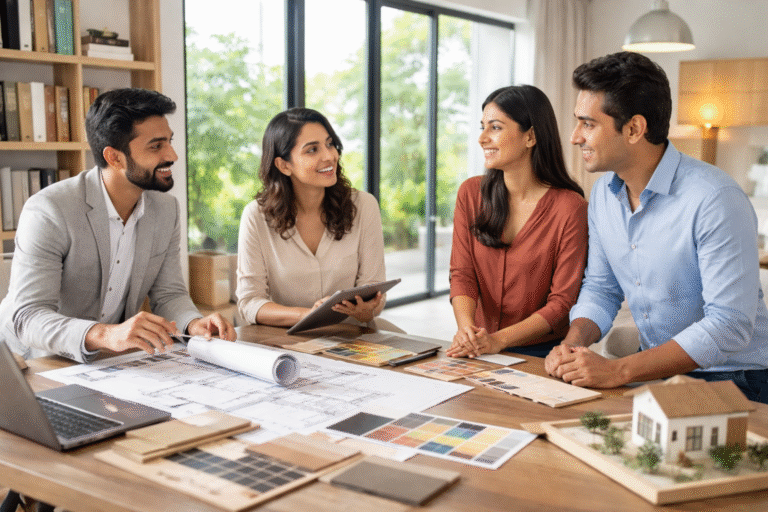
At Dimensional Architects, we often start projects by observing how people actually work during the day. Some people need deep focus for long hours, while others thrive in collaborative settings.
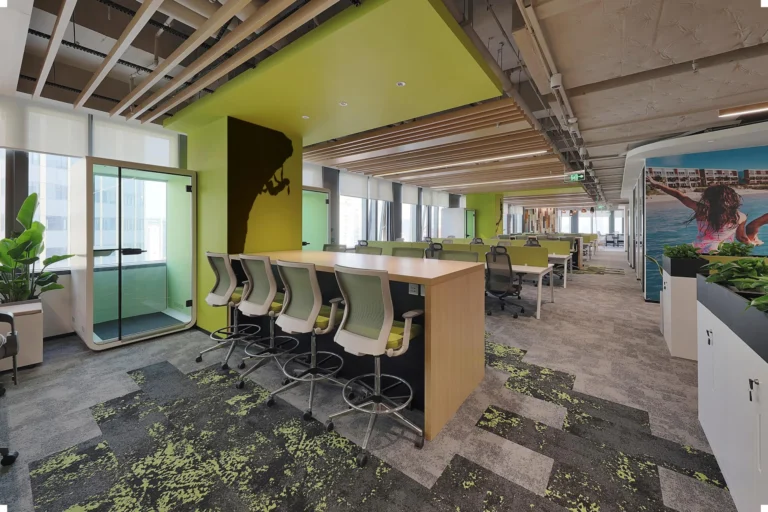
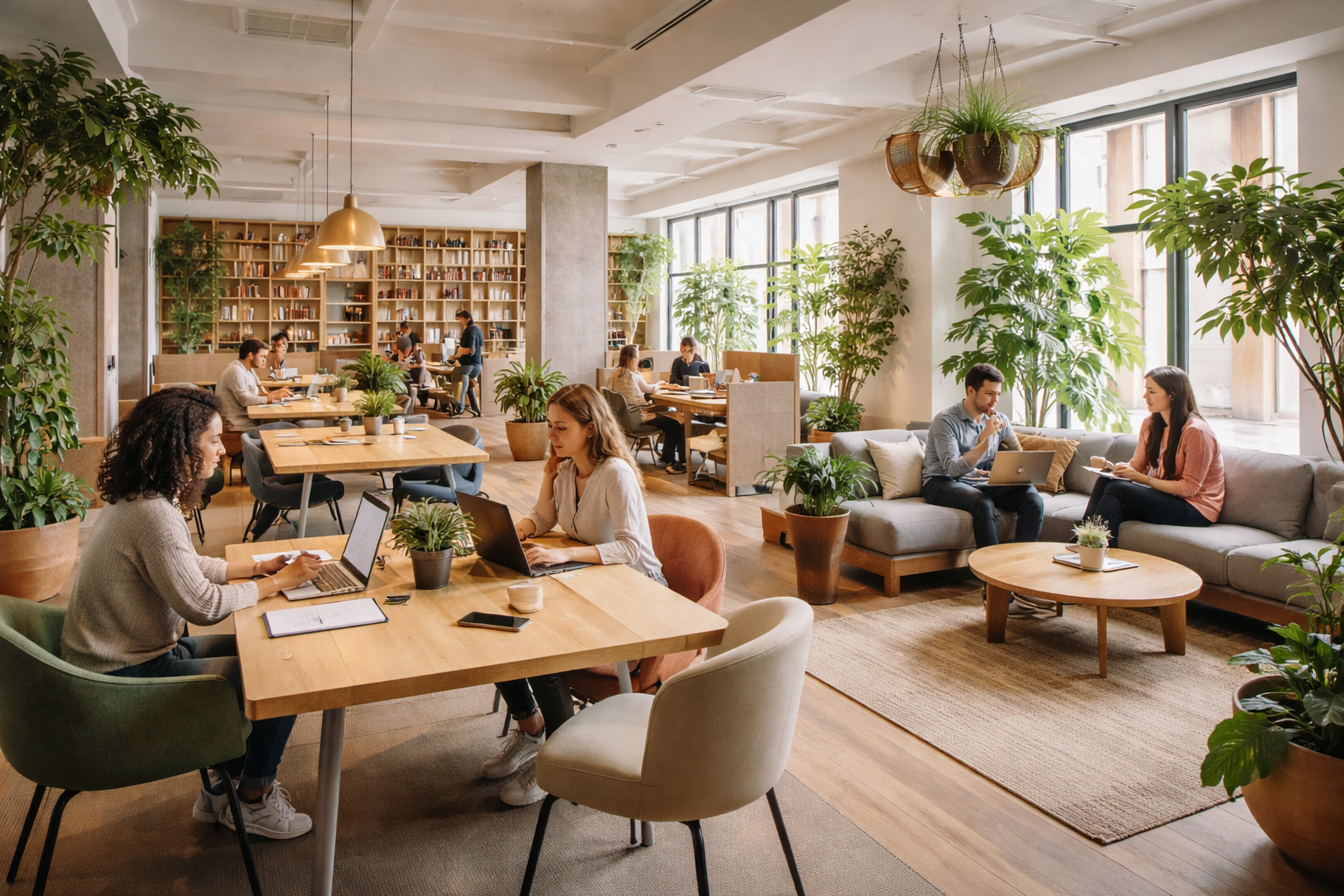
So instead of designing one uniform layout, we create activity-based zones that support different types of work:
- Quiet areas for focused tasks
- Open tables for collaboration
- Relaxed lounges for informal discussions
This balance allows people to choose the environment that matches their mental state, improving both productivity and comfort.
2. The Psychology of Open Collaboration vs Private Workspaces
One of the biggest challenges in modern coworking spaces is finding the right balance between openness and privacy.
Open layouts encourage spontaneous interaction, which can spark creativity and new ideas. But too much openness can also lead to distractions and mental fatigue.
That’s why thoughtful coworking space interior design always includes both collaborative and private spaces.
In many of our projects at Dimensional Architects, we introduce:
- Semi-private booths for quick calls
- Acoustic pods for focused work
- Open collaboration tables
- Enclosed meeting rooms
This layered approach mirrors how people naturally switch between collaboration and concentration throughout the day.
A designer’s role is not to force one style of work — but to support many.
3. Lighting, Colors, and Materials Shape Mood
The psychology of workspace design goes deeper than layout. Even subtle elements like lighting and materials influence how people feel while working.
Natural light, for example, has a direct impact on mood and energy levels. Spaces with large windows and daylight tend to feel more alive and energizing.
Color also plays a psychological role:
- Soft neutrals create calm focus
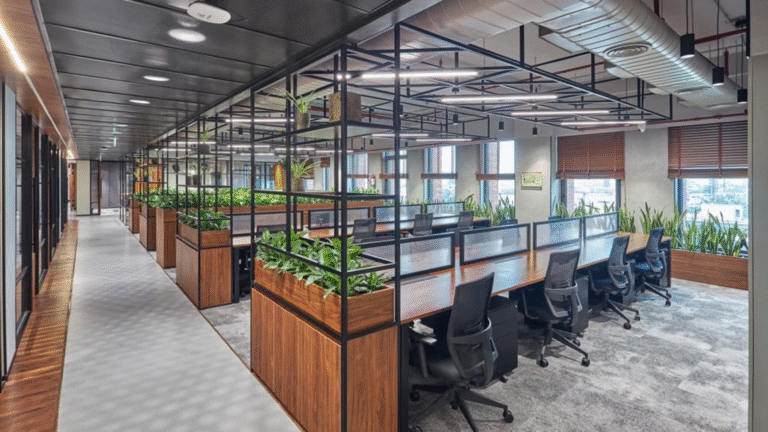
- Warm wood textures add comfort and warmth
- Muted greens or blues support concentration
At Dimensional Architects, we carefully choose materials that make spaces feel welcoming rather than corporate or sterile.
In coworking environments, people spend long hours working. The goal is to make the space feel human, relaxed, and inspiring, not rigid.
4. Acoustics: The Hidden Psychology of Focus
Noise is one of the biggest challenges in coworking environments.
Too much sound can create stress and reduce concentration. But complete silence can make spaces feel uncomfortable or isolating.
Good coworking space design uses acoustic strategies to manage this balance.
In many projects, Dimensional Architects integrates:
- Acoustic ceiling panels
- Sound-absorbing wall materials
- Fabric partitions
- Strategic zoning of quiet and social areas
These subtle design choices control sound without making the space feel closed off.
When acoustics are handled properly, people can work comfortably without constantly feeling distracted.
5. Community-Driven Layouts Build Stronger Connections
One of the biggest reasons people choose coworking spaces is community.
Freelancers, startups, and entrepreneurs often want environments where they can meet like-minded people and share ideas.
Design can either encourage these connections — or accidentally prevent them.
That’s why community-driven layouts are an essential part of modern coworking spaces.
At Dimensional Architects, we often place shared spaces like cafés, lounges, or informal seating areas in central locations. These act as natural social hubs where people casually interact.
Some of the most meaningful professional relationships begin in these simple moments — a quick coffee break or an informal conversation near a shared table.
6. Comfort and Flexibility Improve Work Satisfaction
Traditional offices often feel rigid.
Coworking spaces, however, thrive on flexibility.
Different professionals have different working styles. Some prefer quiet corners. Others enjoy vibrant open spaces.
Good coworking office design gives users choices.
We often design spaces with:
- Flexible seating options
- Lounge work areas
- Standing desks
- Collaborative tables
This flexibility allows people to move throughout the day based on their energy and tasks.
From our experience at Dimensional Architects, this simple freedom dramatically improves overall work satisfaction.
7. Creating a Sense of Belonging
Perhaps the most powerful aspect of the psychology of workspace design is the feeling of belonging.
People perform better in environments where they feel comfortable and connected.
Design plays a quiet but powerful role in this.
Warm materials, welcoming layouts, natural light, and community spaces all contribute to making people feel at home while working.
A good example of this approach can be seen in DA Business Centre, a coworking environment thoughtfully designed to support everyday work life.
With coworking spaces located in Bandra Kurla Complex and Andheri, the design focuses on comfort, flexibility, and community — helping professionals feel productive and connected throughout the day.
As the coworking culture continues to grow across Mumbai, spaces like these show how thoughtful design can elevate the everyday work experience.
Conclusion: Great Coworking Design Starts with Understanding People
Great coworking spaces are not defined by stylish interiors or trendy furniture.
They are defined by how people feel and perform inside them.
The psychology behind great coworking space design lies in understanding how people focus, collaborate, relax, and interact throughout their day.
At Dimensional Architects, we believe the best coworking environments are those that quietly support human behavior — creating spaces where productivity, creativity, and community naturally thrive.
Because in the end, great design is not just about buildings.
It’s about designing experiences where people can do their best work every day.