Layered Lighting in the Bedroom: A Simple Guide for Better Comfort
Your bedroom light controls how your day begins and ends
In almost every home we design, people focus first on the bed, wardrobe and wall finishes. Lighting usually becomes an afterthought — one ceiling light and maybe a lamp.
But during site visits, we hear the same things again and again:
“It feels too bright at night.”
“I can’t relax here.”
“My partner sleeps but I need light.”
“The room looks good but doesn’t feel cozy.”
This is not a décor problem. It’s a bedroom lighting design issue.
Lighting directly affects your comfort, your mood after a long workday, and even how well you sleep. That’s why layered lighting is one of the most important parts of creating a truly comfortable bedroom.
What is layered lighting (in real-life terms)?
Layered lighting simply means using different types of lights for different purposes, instead of depending on one harsh ceiling light.
Think of it like how you use your bedroom through the day:
- Morning: getting dressed, finding clothes
- Evening: relaxing, talking, unwinding
- Night: reading, using your phone, moving quietly
- Weekend: resting, watching something, slow mornings
One light cannot support all these moods. That’s why good bedroom lighting ideas always combine three layers.
1. Ambient Lighting — The Overall Glow
This is your base light. It fills the room so you can move comfortably.
But in bedrooms, ambient lighting should never feel sharp or office-like.
In our residential projects, we prefer:
- Soft recessed ceiling lights
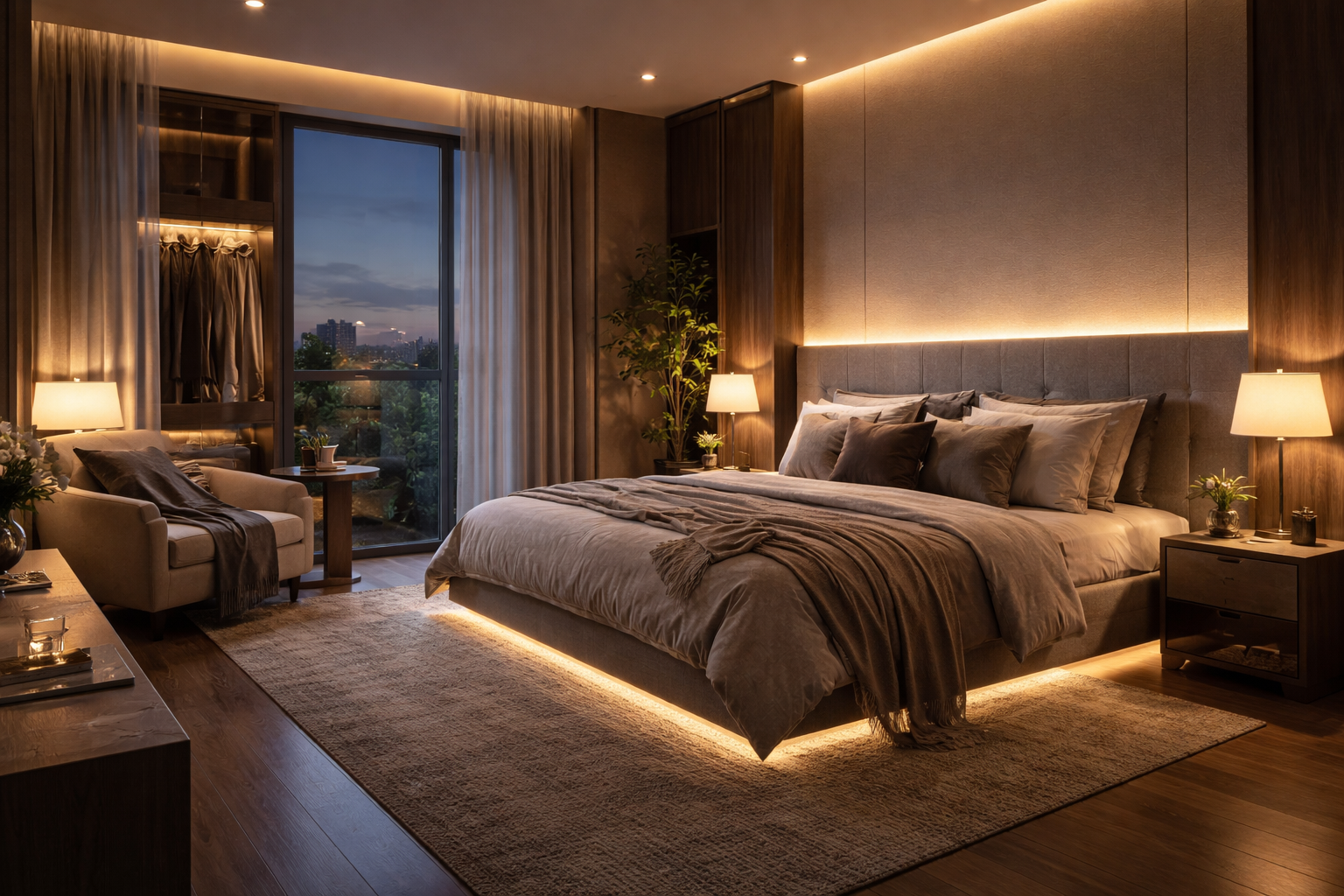
- Cove lighting
- Indirect lighting reflecting off the ceiling
- Diffused ceiling fixtures
The goal is gentle, even brightness, not a spotlight effect. Many homes use a single powerful white LED panel — technically bright, but uncomfortable to live with.
For a bedroom, light should calm you, not energize you like a workspace.
2. Task Lighting — For Daily Activities
Your bedroom is a working space in its own way.
You read.
You scroll.
You get ready in a hurry in the morning.
You open wardrobes at night without waking others.
Task lighting supports these moments without lighting up the whole room.
Practical examples we use often:
- Bedside wall lights or lamps for reading
- Focused light at dressing mirrors
- Soft wardrobe lighting
- Small desk light if there’s a work corner
This is especially important for couples. One person can read or work while the other rests — without disturbing sleep. That’s real comfort, not just good design.
3. Accent Lighting — Where Comfort Becomes Emotion
This is the layer that makes a bedroom feel warm, not flat.
Accent lighting adds depth, softness, and mood. It’s subtle but powerful.
We often include:
- Cove lighting behind the headboard
- Soft LED strips under floating beds
- Backlit panels
- Curtain pocket lighting
Accent lighting is what helps transform a room from “functional” to emotionally comforting — a big part of comfortable bedroom lighting.
Common Bedroom Lighting Mistakes
From on-site experience, these issues come up repeatedly:
- Only one ceiling light
- Cool white light used everywhere
- No bedside lighting
- No wardrobe lights
- Lights placed directly above the pillow (glare issue)
- No dimmers
These choices may seem small, but they affect how you feel in the room every single day.
How Lighting Affects Sleep and Relaxation
Light signals your brain.
Bright, cool light = alert mode.
Soft, warm light = relax mode.
If your bedroom uses strong white lighting at night, your mind stays active longer. This impacts your ability to wind down.
For better rest, we always recommend:
- Warm light tones (around 2700K–3000K)
- Indirect lighting in the evening
- Dimmers to reduce brightness at night
This is a key part of how to design bedroom lighting that supports both lifestyle and sleep.
Practical Tips We Use in Real Homes
These small decisions make a big difference:
Use multiple switches – Divide ambient, task, and accent lighting so you can change the mood easily.
Install dimmers – One of the simplest upgrades for better comfort.
Correct bedside light height – Should be slightly above shoulder level when seated in bed — prevents glare.
Light your wardrobes – Improves morning routines and avoids turning on bright room lights.
Avoid center lights above the bed – They feel uncomfortable when lying down.
Choose warm light for most fixtures – Cool light only where task clarity is needed.
Bedroom Lighting Ideas for Small Bedrooms
Small bedrooms benefit even more from layered lighting.
We often suggest:
- Wall-mounted bedside lights to save space
- Cove lighting to make ceilings feel higher
- Mirror lighting to add visual depth
- Under-bed soft lights for night movement
Good lighting makes small spaces feel larger, softer, and more comfortable.
Beauty + Function = Good Bedroom Lighting
A light fixture can look beautiful — but if it causes glare, harsh shadows, or discomfort, it fails in daily life.
The best bedroom lighting ideas balance:
- Visual appeal
- Emotional comfort
- Practical usability
That balance is what we focus on in every home.
Final Thoughts
Lighting is something you don’t notice when it’s right — but you feel it every day.
Layered lighting supports real life: slow mornings, late-night reading, quiet conversations, restful sleep. It adapts to your routine instead of forcing you to adjust.
At Dimensional Architects, we approach bedroom lighting as part of human-centered design — creating spaces that feel good to live in, not just good to photograph. Because a bedroom should help you relax, recharge, and truly feel at ease.