Elementor #3855
Open Office vs Zoned Office Layouts: What Works Best for Modern Businesses
The modern workplace has evolved rapidly over the last decade. Businesses today are rethinking how office layouts affect productivity, collaboration, employee well-being, and brand perception. Two of the most commonly debated workplace models are open office layouts and zoned office layouts. Each has distinct advantages and limitations, and the right choice depends on how a business functions rather than what looks visually appealing.
This blog explores the differences between open and zoned office layouts, their impact on modern businesses, and how to choose the most effective approach.
Understanding Office Layouts in Commercial Interior Design
Office layout planning is a core element of commercial interior design. It defines how people move, communicate, focus, and collaborate within a workspace. A well-planned layout aligns with organizational goals, work culture, and operational requirements.
In modern commercial interiors, layouts are no longer one-size-fits-all. Businesses now require flexible, efficient, and employee-centric spaces.
What Is an Open Office Layout?
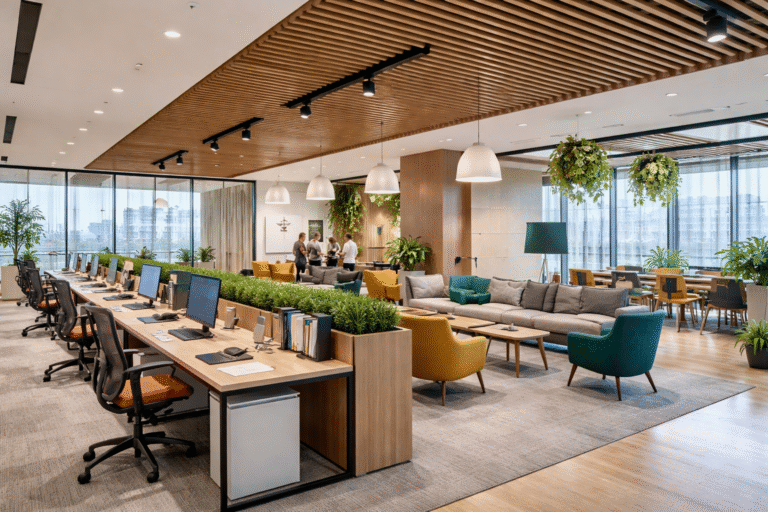
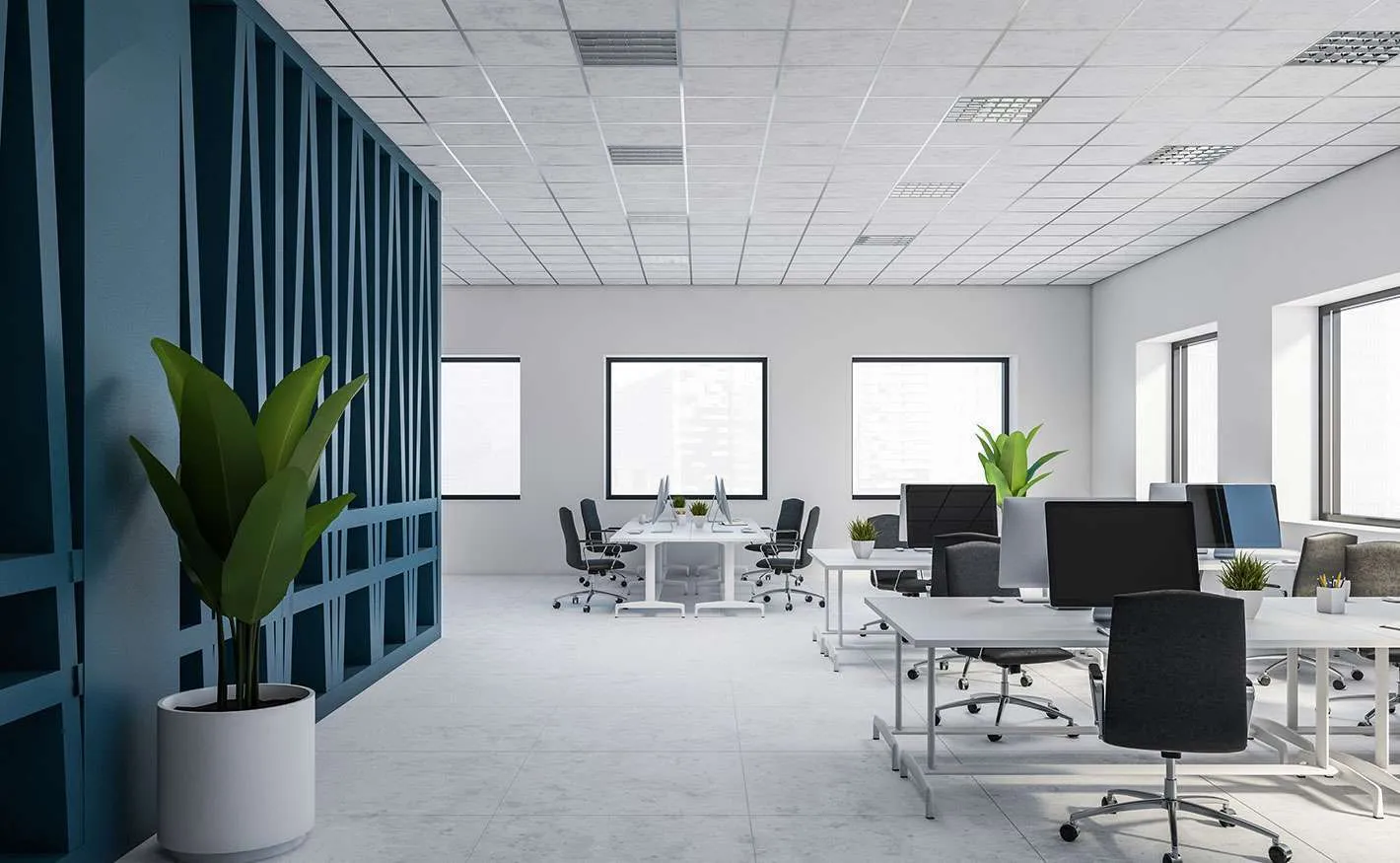
An open office layout is characterized by minimal physical barriers. Workstations are arranged in open areas without full-height partitions or enclosed cabins.
Key Features of Open Office Layouts
Open workstations or benching systems
Shared work areas
Limited private cabins
Emphasis on transparency and collaboration
Open offices gained popularity for their ability to promote communication and optimize space usage, especially in growing organizations.
Advantages of Open Office Layouts
1. Encourages Collaboration and Communication
Open offices remove physical barriers, making it easier for teams to interact, brainstorm, and collaborate. This setup works well for creative teams and fast-paced environments.
2. Efficient Space Utilization
Open layouts maximize usable floor area. More employees can be accommodated within the same square footage, making it cost-effective for high-density offices.
3. Cost Savings
Reduced partitioning and construction lead to lower interior fit-out costs. Maintenance and future reconfiguration are also easier.
4. Visual Transparency and Brand Culture
Open offices convey openness, equality, and modern work culture, aligning well with startups and innovation-driven organizations.
SEO keywords: open office layout, open office design
Challenges of Open Office Layouts
1. Noise and Distractions
Lack of acoustic separation can lead to distractions, affecting focus and productivity, especially for tasks requiring deep concentration.
2. Reduced Privacy
Confidential discussions, focused work, and individual comfort can be compromised in completely open environments.
3. One Layout Does Not Suit All Roles
Not all departments function well in open settings. Finance, legal, and leadership teams often require privacy.
What Is a Zoned Office Layout?
A zoned office layout divides the workplace into clearly defined areas based on function. Each zone supports a specific activity, such as focused work, collaboration, meetings, or relaxation.
Common Zones in a Zoned Office
Workstation zones
Meeting and conference rooms
Quiet focus areas
Collaboration and breakout spaces
Leadership cabins
Informal lounges
Zoned offices balance openness with privacy, creating a structured yet flexible environment.
Advantages of Zoned Office Layouts
1. Supports Diverse Work Styles
Zoned layouts accommodate different tasks and personalities. Employees can choose spaces that best suit their work requirements.
2. Improved Productivity
Quiet zones allow focused work, while collaboration zones encourage teamwork without disturbing others.
3. Better Acoustic and Visual Control
Zoning helps manage noise levels and visual distractions, improving overall comfort.
4. Enhanced Employee Well-Being
Providing options reduces stress and improves satisfaction, leading to better performance and retention.
SEO keywords: zoned office layout, office zoning design
Challenges of Zoned Office Layouts
1. Higher Planning and Execution Cost
Zoned layouts require detailed planning, partitions, and acoustic solutions, increasing initial investment.
2. Requires Space Discipline
If not managed well, zones can be misused, reducing their effectiveness.
3. Needs Clear Design Strategy
Without proper planning, zoning can feel fragmented or underutilized.
Open Office vs Zoned Office: Key Comparison
Productivity
Open Office: High collaboration, lower focus
Zoned Office: Balanced productivity with dedicated focus areas
Cost
Open Office: Lower fit-out cost
Zoned Office: Higher upfront cost, better long-term value
Flexibility
Open Office: Easy to reconfigure
Zoned Office: Structured flexibility with planned zones
Employee Satisfaction
Open Office: Works for some roles
Zoned Office: Higher overall satisfaction across teams
Which Office Layout Works Best for Modern Businesses?
The answer is rarely one or the other. Most modern businesses benefit from a hybrid approach that combines open workstations with zoned spaces.
Businesses Suited for Open Offices
Startups and early-stage companies
Creative and design firms
Sales and marketing teams
Businesses Suited for Zoned Offices
Corporate offices
IT and consulting firms
Companies with mixed work functions
Leadership-driven organizations
Role of Commercial Interior Design in Office Layout Planning
A professional commercial interior designer evaluates:
Business workflow and hierarchy
Employee count and growth plans
Brand identity and culture
Acoustic and ergonomic needs
Compliance and safety requirements
Designers create layouts that evolve with business needs rather than restrict them.
SEO keywords: commercial office interior design, office layout planning
Future of Office Layouts: Flexibility Is Key
Modern workplaces are moving towards adaptable layouts that support hybrid work models. Flexible furniture, movable partitions, and multipurpose zones allow offices to respond to changing business demands.
The future lies in designing offices that work for people, not just floor plans.
Conclusion
Both open office and zoned office layouts have their place in modern commercial interiors. Open offices encourage collaboration and efficiency, while zoned offices support focus, comfort, and productivity. The most effective solution depends on business goals, team structure, and work culture.
A thoughtfully designed office layout—often a blend of both approaches—delivers the best results. Partnering with an experienced commercial interior designer ensures your workspace supports performance, growth, and long-term success.