Designing Corporate Offices for Scalability in BKC
Designing Corporate Offices for Scalability in BKC
Bandra Kurla Complex (BKC) has established itself as Mumbai’s most prestigious corporate and financial district. Home to multinational corporations, global banks, consulting firms, and fast-growing startups, BKC demands office environments that are not only premium but also scalable. In a location where businesses evolve rapidly, corporate office design must support growth, flexibility, and long-term efficiency.
Designing corporate offices for scalability in BKC is no longer optional—it is a strategic necessity. This blog explores how thoughtful interior design enables businesses to expand, adapt, and future-proof their operations while maintaining a strong professional image.
What Does Scalability Mean in Corporate Office Design?
Scalability in office design refers to the ability of a workspace to grow, shrink, or reconfigure without major disruptions or high reinvestment costs. A scalable corporate office allows organizations to accommodate changing team sizes, evolving work models, and new technologies.
In BKC, where real estate costs are premium, scalable design ensures maximum utilization of space while maintaining flexibility for future business needs.
Key elements of scalable office design include:
Flexible layouts
Modular furniture systems
Technology-ready infrastructure
Efficient space planning
Long-term cost optimization
Why Scalability Is Critical for Corporate Offices in BKC
BKC attracts businesses that are growth-oriented and future-focused. However, long-term leases and rigid office layouts can become obstacles when organizations expand or restructure.
Scalable office interiors help corporates:
Avoid frequent relocations
Reduce renovation costs
Adapt to hybrid and flexible work models
Maintain operational continuity
In a high-demand market like BKC, designing for scalability protects both time and investment.
Smart Space Planning for Future Growth
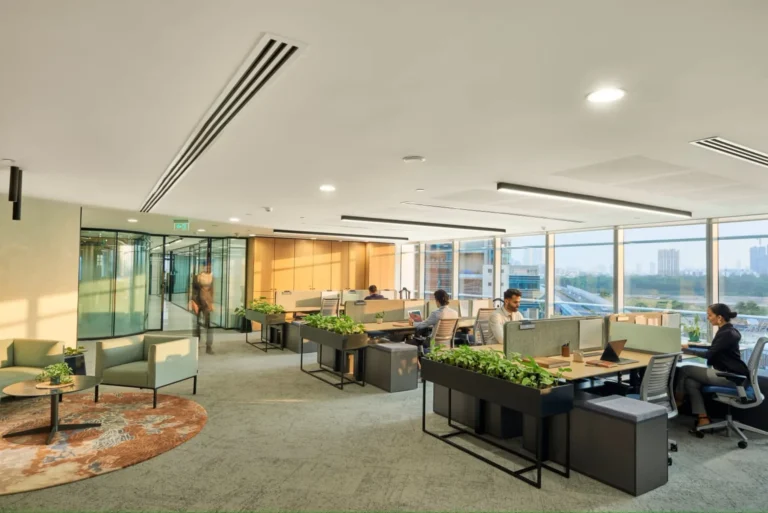
Space planning is the foundation of scalable corporate office design. Instead of designing for current headcount alone, successful BKC offices are planned with future expansion in mind.
Effective space planning strategies include:
Optimized workstation density
Clear circulation paths
Balanced mix of open desks and enclosed spaces
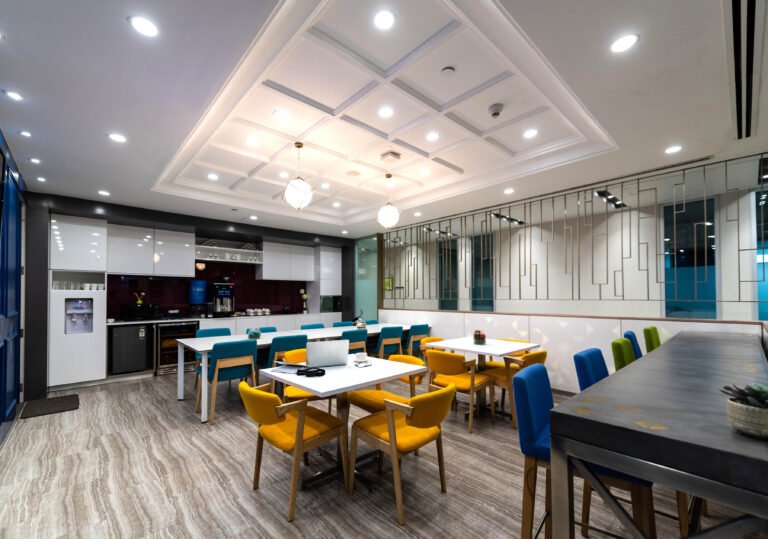
Multi-functional zones
By anticipating growth, companies can expand teams within the same floor plate without compromising comfort or productivity.
Modular Layouts and Flexible Work Zones
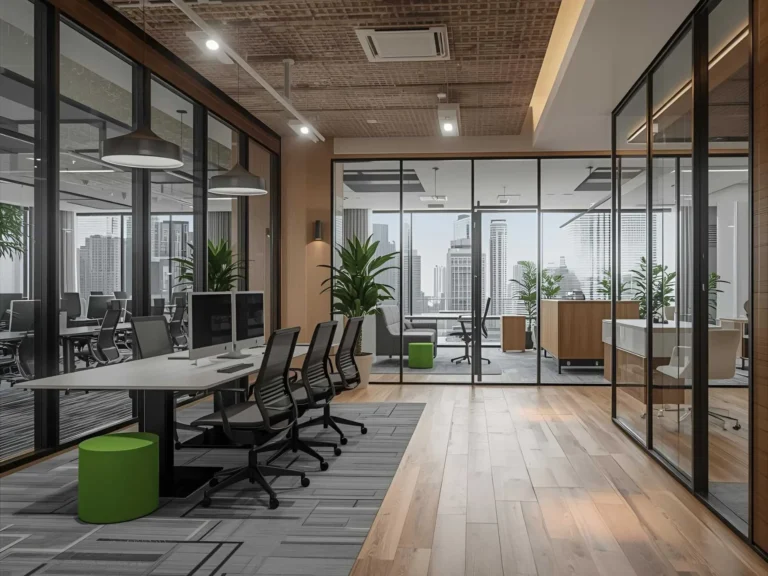
Rigid office layouts limit adaptability. Scalable corporate offices in BKC rely on modular design principles that allow easy reconfiguration.
Examples include:
Demountable partitions instead of fixed walls
Modular cabins that can be resized or relocated
Multi-use meeting rooms and collaboration areas
These solutions enable businesses to modify layouts quickly as team structures change, without major civil work.
Furniture Systems That Support Scalability
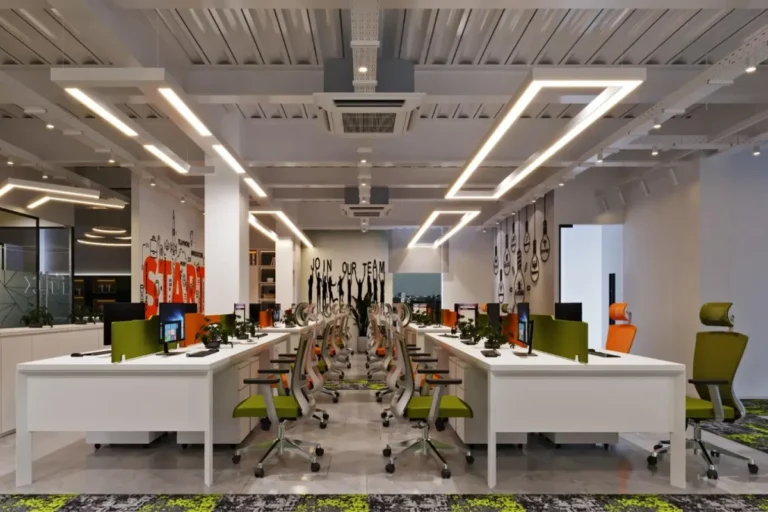
Furniture plays a critical role in scalable office interiors. In BKC corporate offices, modular and ergonomic furniture systems are preferred over custom-built, fixed units.
Scalable furniture benefits include:
Easy addition or removal of workstations
Uniform aesthetics even after expansion
Better ergonomics and employee comfort
Cost efficiency over time
Choosing standardized workstation systems ensures consistency while allowing growth.
Technology-Ready Infrastructure
A scalable corporate office must be designed to support future technology upgrades. In BKC, where companies rely heavily on digital infrastructure, this is especially important.
Technology-ready design includes:
Structured data cabling
Floor boxes and flexible power points
Strong Wi-Fi and network coverage
AV-ready meeting rooms
Planning technology infrastructure during the design stage prevents disruptions during expansion and ensures seamless scalability.
Designing for Hybrid and Flexible Work Models
Hybrid work is now a permanent part of corporate culture. Scalable office design in BKC must support both in-office and remote workforces.
Key design considerations include:
Hot-desking and flexible seating
Collaboration zones instead of excess fixed desks
Quiet focus rooms and phone booths
Booking-enabled meeting spaces
These elements allow offices to scale efficiently without increasing real estate footprint unnecessarily.
Compliance and Safety in Scalable Office Design
As offices expand, compliance requirements also increase. Scalable corporate interiors in BKC must adhere to safety and regulatory standards from the start.
Important compliance factors include:
Fire safety and evacuation planning
HVAC load capacity for future expansion
Accessibility norms
Building and fire approvals
Designing with compliance in mind avoids costly rework during future growth phases.
Brand Consistency During Expansion
As companies scale, maintaining a consistent brand image becomes challenging. Scalable office design ensures that expansion areas align with existing aesthetics and corporate identity.
This is achieved through:
Consistent color palettes
Standardized materials and finishes
Repeatable branding elements
Unified signage systems
In BKC, where client perception matters, brand consistency across office spaces is crucial.
Cost Efficiency and Long-Term ROI
Scalable office interiors may require slightly higher upfront planning, but they deliver significant long-term savings. Businesses avoid repeated renovation costs, downtime, and relocation expenses.
Benefits include:
Lower cost per expansion
Better space utilization
Reduced operational disruption
Higher asset value for landlords and investors
In premium markets like BKC, scalable design directly contributes to better return on investment.
Why BKC Corporates Prefer Scalable Office Interiors
Corporate occupiers in BKC prioritize:
Flexibility without compromising quality
Speed of expansion
Professional and future-ready environments
Predictable costs
Scalable interior design aligns perfectly with these priorities, making it the preferred approach for modern corporate offices.
Conclusion
Designing corporate offices for scalability in BKC is about planning beyond today’s needs. It is a strategic approach that combines smart space planning, modular design, technology readiness, and compliance to create future-proof workplaces.
In a competitive business district like BKC, scalable office interiors enable organizations to grow confidently, adapt quickly, and operate efficiently without constant reinvention of space. Whether for startups preparing to scale or enterprises managing dynamic teams, scalability-driven design is the key to long-term success in BKC’s corporate ecosystem.