Cost-Effective Small Office Design Ideas That Will Be Trending in 2026
Starting or running a small business already stretches your budget — rent, salaries, marketing, operations… and then comes the office. Most business owners we meet say the same thing: “We want the space to look professional, but we can’t spend like a big corporate.”
And honestly? You shouldn’t have to.
At Dimensional Architects, we’ve worked with growing startups, consultants, clinics, and creative teams who needed smart small office design — not luxury interiors, but spaces that work hard every single day. The office design trends of 2026 are actually great news for small businesses, because they focus on flexibility, simplicity, and smarter spending rather than flashy décor.
Here are practical, real-world budget office design ideas we’re already using in projects.
1. Flexible Layouts Instead of Fixed Furniture
In many small offices, space is not the problem — rigid layouts are.
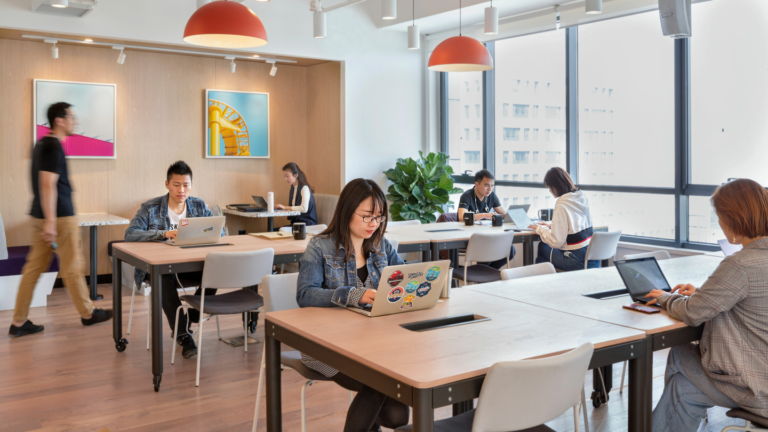
We often see offices where every desk is permanently fixed, even though teams are hybrid or on-site only part-time. That’s wasted space. One of the biggest office design trends in 2026 is flexibility.
At Dimensional Architects, we design layouts with:
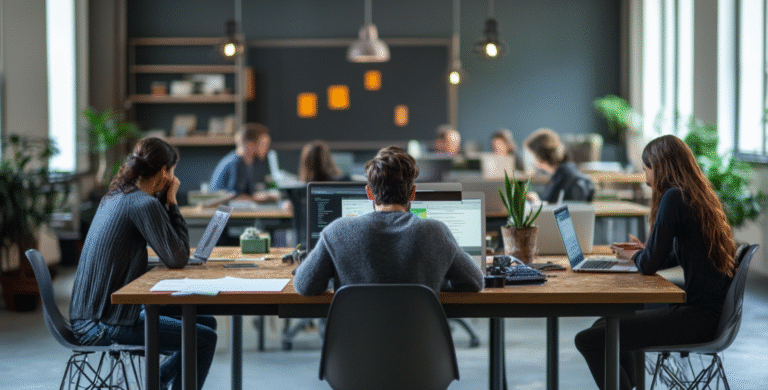
- Shared work tables instead of individual bulky desks
- Lightweight chairs that move easily
- Mobile storage units
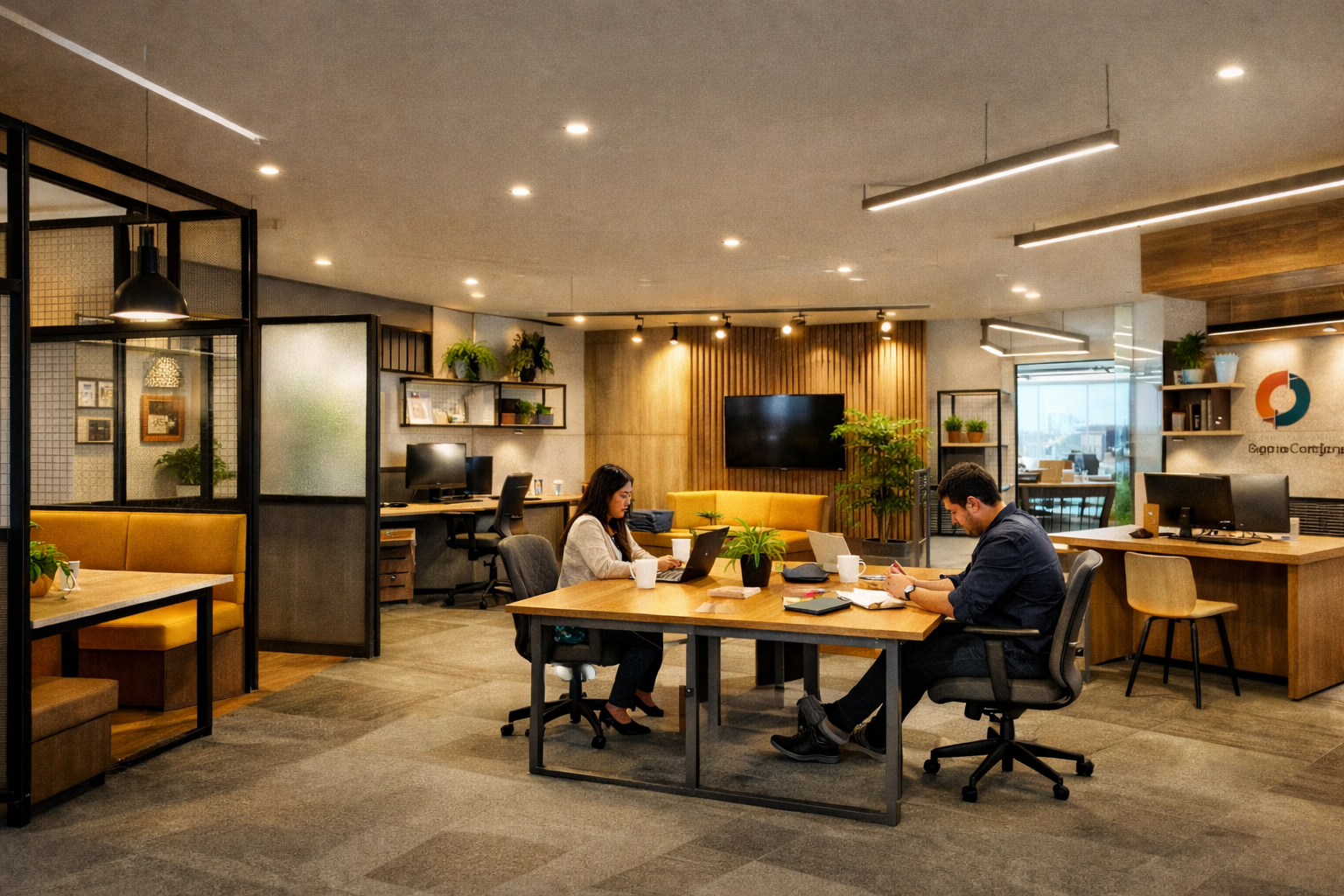
In a recent project near BKC, Mumbai, a finance startup had just 700 sq. ft. Instead of 10 heavy desks, we created two collaborative tables and 2 quiet focus corners. Same team, less furniture, more usable space — and lower furniture cost.
2. Use Partitions Smartly — Not Expensively
Glass cabins everywhere look modern, but they’re not always cost-effective. Full-height glass partitions increase both material and installation costs.
A smarter cost-effective office interior solution:
- Half-height partitions
- Open shelves as space dividers
- Frosted films instead of expensive glass designs
We’ve done this in multiple small office design projects where owners wanted “cabins” without the cabin cost. The result? Defined zones without closing the space or draining the budget.
3. Focus on Lighting Before Fancy Decor
Business owners often ask about feature walls or decorative panels first. But poor lighting affects productivity more than any design element.
In 2026 office design, lighting is functional and simple:
- Linear LED lights for work areas
- Warm lights in meeting or waiting areas
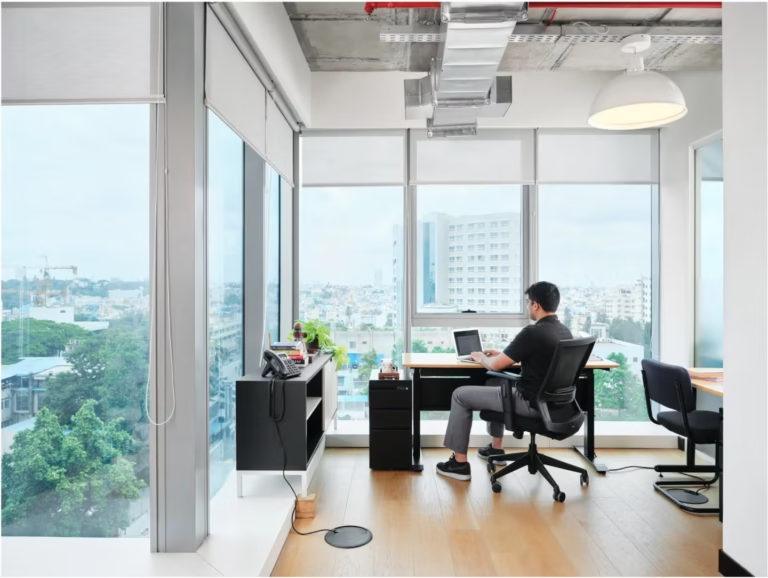
- Maximum use of natural light
At Dimensional Architects, we’ve seen teams feel more energetic just by fixing lighting. In one project, we removed heavy window blinds and replaced them with sheer blinds. Cost was minimal — but the office instantly felt larger and more positive.
Good lighting reduces eye strain and improves mood. That’s not décor — that’s daily performance.
4. Multi-Use Spaces Are the Real Luxury
Small offices can’t afford single-use rooms.
That “conference room” that’s used twice a week? Waste of prime space. One of the smartest budget office design ideas is creating multi-purpose zones.
Examples we use often:
- Meeting table that also works as a lunch table
- Reception area that doubles as informal discussion space
- Foldable partitions to convert one room into two
This approach helps small businesses avoid taking bigger offices than they actually need — and rent is your biggest expense.
5. Simple Materials That Age Well
2026 trends are moving away from flashy finishes. Clean, durable materials are in.
In our cost-effective office interiors, we recommend:
- Laminate finishes instead of veneer
- Vinyl or laminate flooring instead of marble
- Painted walls with one accent zone, not expensive cladding everywhere
Why? Because maintenance matters. We’ve seen small businesses spend again in just 2–3 years because materials were too delicate. Smart material selection saves long-term repair costs.
Dimensional Architects always designs keeping future wear and tear in mind, not just the opening day photos.
6. Storage That Disappears Into Design
Clutter kills productivity. But separate storage rooms eat space.
Instead, in small office design, we integrate storage:
- Cabinets under work tables
- Wall-mounted shelves
- Storage built into partitions
In one project, we converted a blank corridor wall into full-height storage. No extra room required, and the office instantly looked organized. Organized spaces reduce stress — something every small team feels daily.
7. Branding Through Subtle Design, Not Expensive Decor
Many business owners think branding means large logos and feature walls. That’s not necessary.
In 2026 office design trends, branding is subtle:
- Brand colors in chairs or cushions
- Logo in reception lighting panel
- Consistent color palette
This keeps costs down and still gives a professional impression to clients. We’ve helped many clients through Dimensional Architects create strong brand identity without overspending on decorative elements.
How Smart Design Saves Money Long-Term
A well-planned small office design reduces hidden costs:
- Flexible layouts prevent future renovation when teams grow
- Durable materials reduce repair expenses
- Good lighting lowers electricity usage
- Multi-use spaces reduce the need for larger rentals
The cheapest design is not the one that costs less today — it’s the one you don’t need to redo after 2 years.
A Note from Dimensional Architects
We understand small business pressure because most of our commercial interior projects involve growing companies, not big corporates. At Dimensional Architects, our goal isn’t to create expensive offices — it’s to create spaces that help teams work better, feel comfortable, and grow without constant renovation stress.
Good design isn’t about spending more. It’s about planning smarter.
If your office feels cramped, unproductive, or expensive to maintain, the solution may not be a bigger space — just a better-designed one.