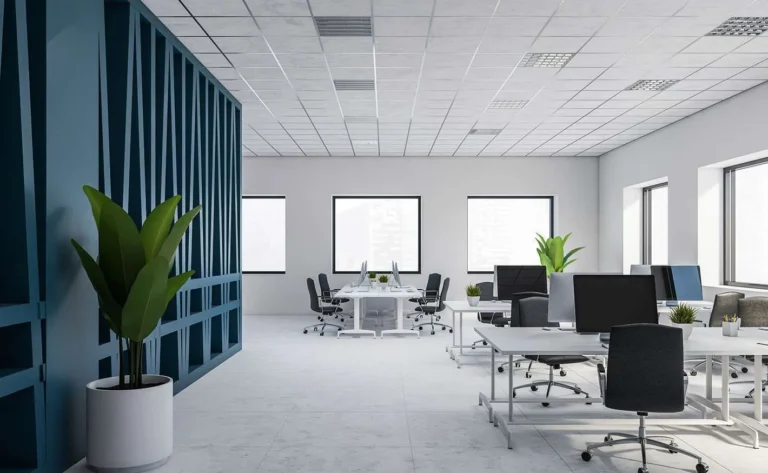
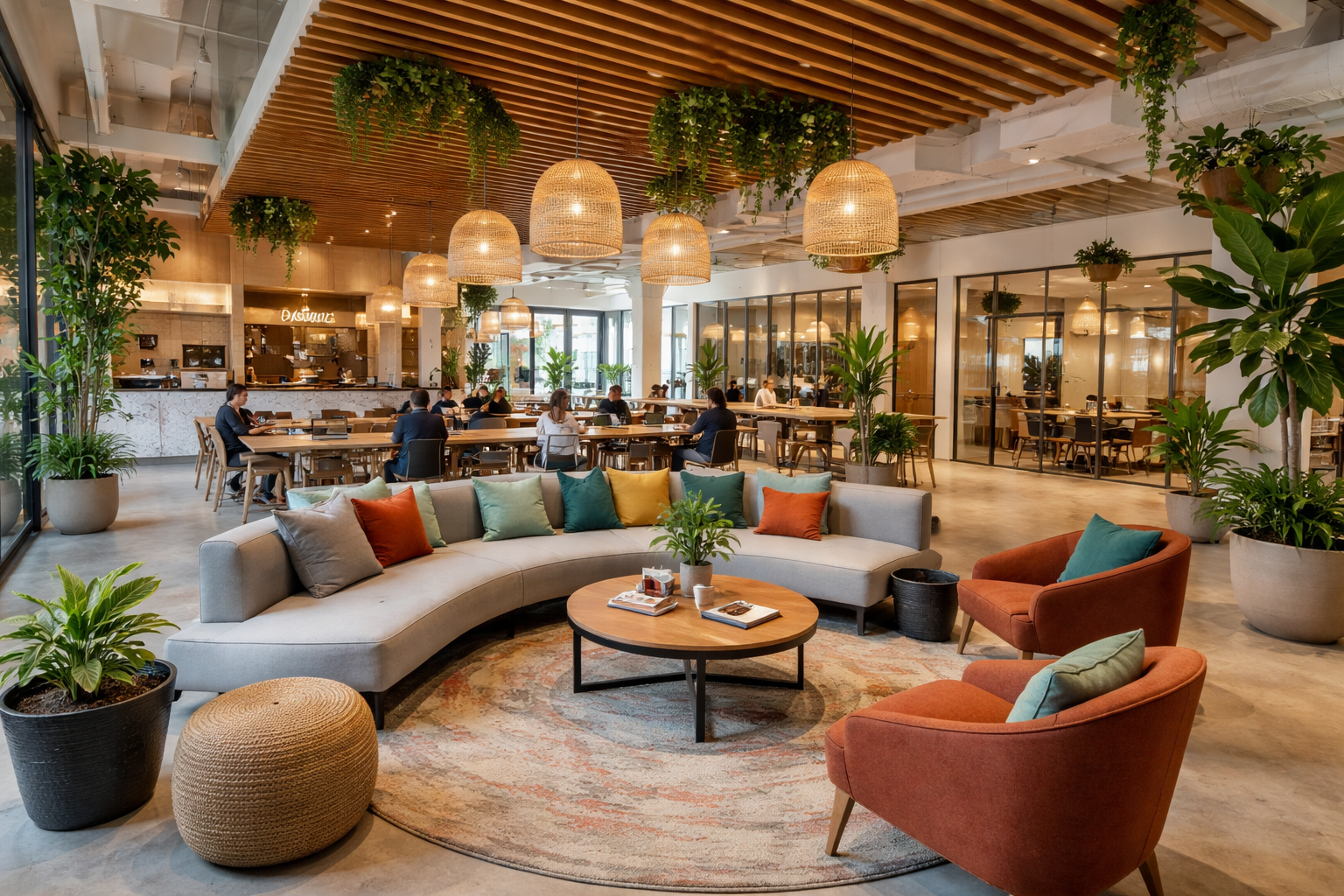
Co-Working Space Design Trends in India
Over the last few years, the way people work in India has changed dramatically. Traditional offices with fixed cubicles and rigid layouts are slowly being replaced by flexible, collaborative environments. Startups, freelancers, remote teams, and even large corporations are increasingly choosing co-working spaces as their preferred workplace.
Cities like Mumbai, Bangalore, Delhi, and Pune have witnessed an explosion of shared office environments. Walk into any thriving business district today and you will likely find a vibrant coworking hub buzzing with entrepreneurs, designers, developers, consultants, and founders working side by side.
But while the concept of co-working is about flexibility and community, the design of the space plays an equally critical role in making it successful.
At Dimensional Architects, we have worked on multiple workspace and commercial interior projects and have seen first-hand how thoughtful coworking space design can transform the way people collaborate, think, and build businesses.
From our projects and workspace planning experience — including projects around BKC, Mumbai — we have noticed several design trends shaping the future of co-working spaces in India.
Let’s explore these trends and understand how great design can turn a simple office into a thriving professional ecosystem.
Why Design Matters in Co-Working Spaces
A coworking office is not just a place with desks and Wi-Fi. It is an environment where ideas are exchanged, businesses are launched, and collaborations are born.
Poorly designed spaces often lead to:
- Noise distractions
- Lack of privacy
- Poor circulation flow
- Uncomfortable seating
- Low productivity
On the other hand, well-designed spaces create a completely different experience.
At Dimensional Architects, when we approach modern workspace design, we look at the space from a user’s perspective.
We ask questions like:
- How will freelancers use the space throughout the day?
- Where will teams collaborate?
- Where can people take calls privately?
- How can we create a balance between openness and focus?
These questions guide the entire office interior design in India today — especially when it comes to flexible workspaces.
Good coworking design supports productivity, encourages networking, and creates a professional environment that members are proud to work from.
Top Co-Working Space Design Trends in India
1. Flexible and Modular Workspace Layouts
Flexibility is the heart of coworking.
Today’s coworking spaces must adapt to different types of users — freelancers, startup teams, remote employees, consultants, and corporate satellite offices.
Instead of fixed layouts, modern coworking spaces use modular furniture and adaptable layouts.
Common flexible design elements include:
- Movable workstations
- Modular meeting pods
- Convertible desks
- Foldable partitions
- Multi-purpose collaboration areas
At Dimensional Architects, we often design flexible layouts that allow operators to reconfigure the space easily depending on occupancy and business needs.
A meeting area in the morning might transform into a workshop space in the evening.
This type of flexible workspace design helps coworking operators maximize their space while giving members more options for how they work.
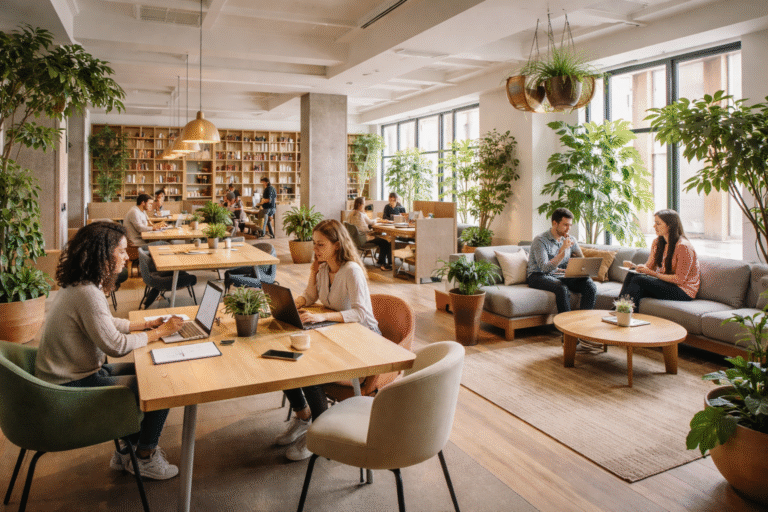
2. Community-Driven Design
One of the biggest reasons people choose coworking spaces is community.
Design can play a powerful role in encouraging interaction.
Instead of isolating users, modern coworking offices are designed to naturally bring people together.
Some design strategies include:
- Central café zones
- Informal lounge seating
- Shared brainstorming areas
- Open collaboration tables
- Event and networking spaces
In several projects handled by Dimensional Architects, we create a central social hub within the workspace — often near the pantry or lounge.
This becomes the heartbeat of the office where people grab coffee, start conversations, and build connections.
These simple design choices often lead to spontaneous networking and collaboration.
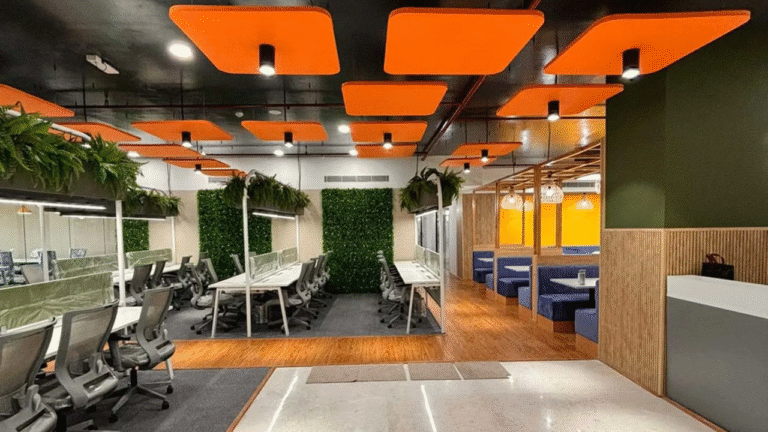
3. Acoustic Comfort and Quiet Zones
While open layouts are great for collaboration, they can quickly become noisy.
Many coworking spaces in India initially focused only on open seating — but over time, operators realized the need for privacy and quiet working areas.
Modern coworking office trends now include:
- Phone booths
- Acoustic pods
- Sound-absorbing ceiling panels
- Private focus rooms
- Silent work zones
From our experience at Dimensional Architects, the key is balance.
A successful coworking space should have:
- Collaborative zones
- Social zones
- Quiet productivity zones
When users can switch between these environments during the day, productivity improves dramatically.
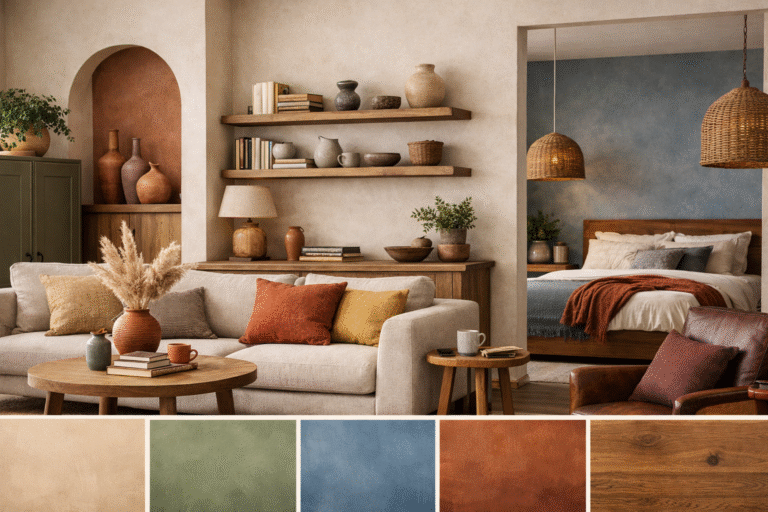
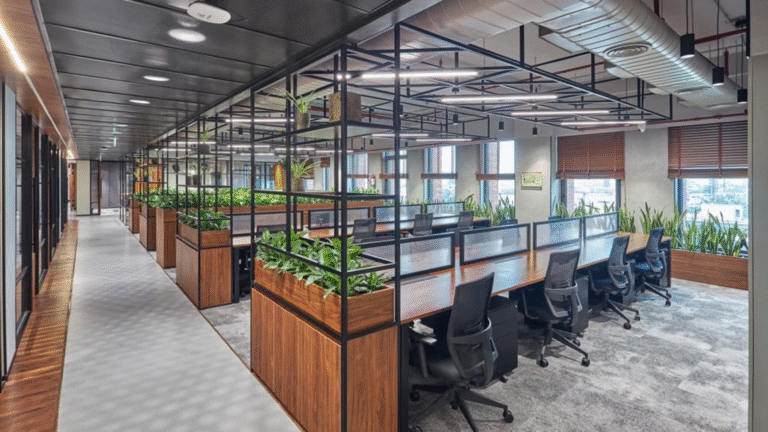
4. Biophilic Design and Natural Elements
People spend long hours at work, and the workspace environment directly affects mood and well-being.
That is why biophilic design — incorporating nature into interior spaces — has become a major trend in office interior design in India.
Design elements include:
- Indoor plants and green walls
- Natural materials like wood and stone
- Large windows and daylight access
- Earthy color palettes
- Open terraces or breakout areas
At Dimensional Architects, we often integrate greenery strategically across coworking environments.
A small indoor garden near the lounge or a green wall near the reception instantly changes the energy of the space.
These design features not only look beautiful but also help reduce stress and increase productivity.
5. Experience-Driven Reception and Entrance Design
First impressions matter.
In coworking spaces, the reception area acts as the brand identity of the workspace.
Modern coworking offices are designing hospitality-style entrances that feel more like boutique hotels than traditional offices.
Key elements include:
- Feature walls with branding
- Warm lighting design
- Comfortable waiting lounges
- Digital check-in systems
- Statement furniture
At Dimensional Architects, we treat the entrance area as a storytelling space.
It should immediately communicate:
- professionalism
- creativity
- trust
This is especially important for coworking members who bring their own clients or investors to the space.
6. Technology-Integrated Workspaces
Modern workspaces rely heavily on technology.
Coworking spaces today must support a variety of digital work needs.
Important design integrations include:
- high-speed internet infrastructure
- wireless charging desks
- smart meeting rooms
- digital booking systems
- integrated presentation technology
When designing modern workspace environments, Dimensional Architects ensures that technology infrastructure is planned early in the design phase.
This avoids messy wiring, connectivity issues, and inefficient work setups later.
Good technology integration makes the workspace seamless and future-ready.
Practical Tips from Dimensional Architects’ Projects
Over the years, working on commercial interiors and coworking environments has taught us some practical lessons.
Here are a few insights we often share with clients.
1. Avoid Overcrowding the Workspace
Many operators try to maximize revenue by adding too many desks.
But overcrowded spaces quickly become uncomfortable.
Instead, focus on balanced density that allows movement and breathing space.
2. Invest in Good Lighting
Lighting can dramatically influence mood and productivity.
Use a mix of:
- natural daylight
- ambient lighting
- task lighting
- feature lighting
Proper lighting makes the workspace more inviting and functional.
3. Create Multiple Work Experiences
People do not work the same way all day.
Design the office to offer different work settings such as:
- quiet desks
- lounge seating
- meeting pods
- collaborative tables
This diversity keeps the workspace dynamic.
4. Think About Circulation Flow
People should be able to move comfortably through the space.
At Dimensional Architects, circulation planning is a key step in flexible workspace design.
Clear pathways reduce congestion and improve usability.
How Good Design Improves Productivity and Brand Identity
A well-designed coworking space does more than just look good.
It directly impacts:
- productivity
- community engagement
- member satisfaction
- brand perception
Members are more likely to renew memberships in spaces where they feel comfortable, inspired, and productive.
For coworking operators, good office interior design in India also becomes a powerful marketing advantage.
Beautiful, functional workspaces attract startups, freelancers, and growing companies looking for a professional environment.
At Dimensional Architects, we always emphasize that design is not just aesthetics — it is a business strategy.
The Future of Co-Working Space Design in India
The future of coworking spaces in India looks extremely promising.
As hybrid work models continue to grow, businesses are seeking flexible offices instead of long-term traditional leases.
This means coworking office trends will continue evolving with a strong focus on:
- hybrid workspaces
- wellness-focused design
- tech-enabled offices
- hospitality-inspired environments
- sustainable materials
Designers and architects will play a key role in shaping these next-generation workspaces.
From our experience at Dimensional Architects, we believe the most successful coworking spaces will be those that prioritize human experience over just desk capacity.
Workspaces should inspire creativity, encourage collaboration, and make people genuinely enjoy coming to work.
Final Thoughts from Dimensional Architects
Co-working spaces are more than shared offices — they are ecosystems where innovation and collaboration thrive.
Designing such environments requires a deep understanding of how people work, interact, and grow their businesses.
At Dimensional Architects, our approach to coworking space design focuses on combining functionality, flexibility, and experience. Whether it’s workspace planning, interior design, or brand-driven environments, our goal is to create offices that truly support the people using them.
With projects and experience across commercial interiors — including work around BKC, Mumbai — we continue to explore new ways to design modern workspaces that enhance productivity and community.
As coworking culture grows in India, thoughtful design will remain the foundation of successful and inspiring workplaces.
And that’s exactly where great architecture makes the difference.