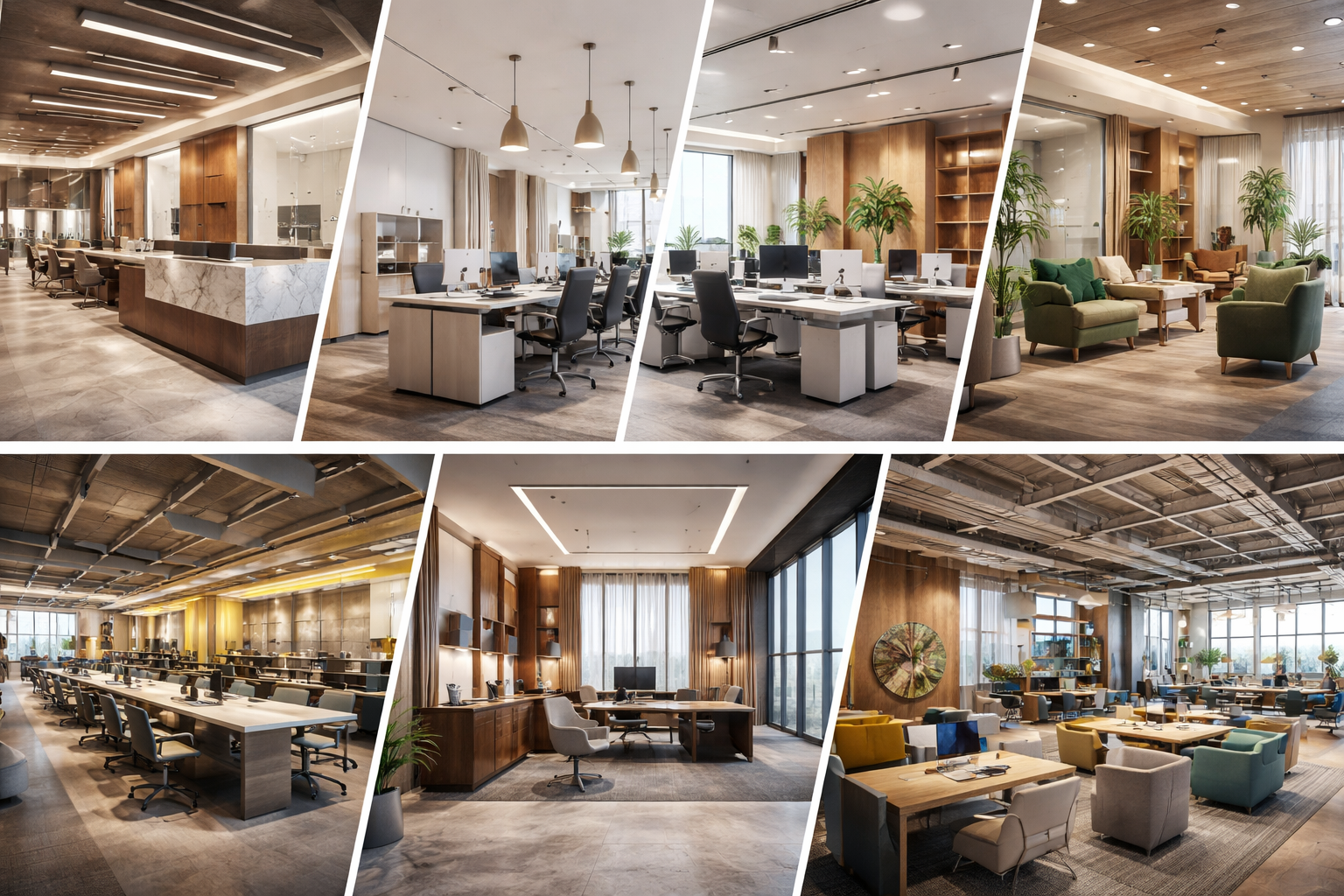
Understanding Commercial Interior Design for Offices: A Practical Guide for Business Owners
Introduction
When business owners start planning a new office or renovating an existing one, the first question is often about looks — Should it be modern? Minimal? Premium? But in commercial spaces, especially offices, design decisions affect far more than appearance. They influence how people work, how clients perceive the brand, and how the business functions every single day.
Many founders and decision-makers feel confused at this stage. Pinterest, Instagram, and Google show thousands of office images, each labelled with a different style. What usually gets missed is this: not every design style works for every business. An office interior that looks impressive online may quietly reduce productivity, feel uncomfortable for teams, or become outdated very quickly.
Understanding different types of commercial interior design before starting helps you make informed decisions — decisions that respect your people, your budget, and your future growth.
What Is Commercial Interior Design?
Commercial interior design is not about decoration. It is about creating spaces that support people, workflow, and long-term business use.
In office environments, good commercial design focuses on:
- How teams move and interact during the day
- How much focus or collaboration the work actually requires
- Comfort over long working hours
- Efficient use of space and resources
- Durability and ease of maintenance
A well-designed office quietly supports daily work instead of demanding attention. When done right, people feel it — even if they can’t always explain why.
Different Types of Commercial Interior Design (Office-Focused)
Below are some of the most common office interior design approaches used in India today. Each has its strengths, and each has situations where it does not work.
Corporate / Professional Office Interiors
Best suited for: Law firms, financial services, consulting companies, corporate headquarters, and client-facing businesses that require trust and structure.
Impact on work and brand: This style communicates stability, professionalism, and reliability. It helps clients feel confident and employees feel organised. Workflows tend to be more structured, with defined zones and private spaces.
Common mistakes to avoid:
- Making the space too rigid or intimidating
- Overusing dark colours without balancing light
- Ignoring comfort in favour of formality
Modern Minimal Office Interiors
Best suited for: Tech companies, startups, small to mid-sized teams, and businesses that value clarity and efficiency.
Impact on work and brand: Minimal offices reduce visual noise. This often improves focus and lowers mental fatigue. The brand appears clean, forward-thinking, and practical.
Common mistakes to avoid:
- Removing storage in the name of minimalism
- Using low-quality finishes that look worn quickly
- Creating spaces that feel cold or impersonal
Contemporary Office Interiors
Best suited for: Growing businesses, design-conscious brands, and companies that want flexibility without committing to a single strict style.
Impact on work and brand: Contemporary offices adapt easily as teams grow. They feel current without being trendy. Employees often find them comfortable and relatable.
Common mistakes to avoid:
- Mixing too many materials or ideas
- Chasing trends that may age quickly
- Lack of a clear design direction
Collaborative / Open Office Layouts
Best suited for: Sales teams, creative teams, fast-moving startups, and businesses that rely on communication.
Impact on work and brand: Open layouts encourage collaboration and transparency. They often improve speed and teamwork when planned correctly.
Common mistakes to avoid:
- Ignoring noise control
- Not providing quiet zones
- Assuming open layout suits every role
Executive & Leadership Office Spaces
Best suited for: Senior leadership, directors, partners, and decision-makers who require privacy and focused work.
Impact on work and brand: Well-designed leadership spaces support confidential discussions and decision-making. They also reflect responsibility rather than luxury.
Common mistakes to avoid:
- Over-designing for status instead of function
- Excessive size that wastes usable area
- Poor integration with the rest of the office
Creative / Studio-Style Offices
Best suited for: Design studios, media agencies, architecture firms, and innovation-led teams.
Impact on work and brand: These spaces encourage expression and experimentation. They often boost morale and attract creative talent.
Common mistakes to avoid:
- Prioritising aesthetics over ergonomics
- Lack of organisation and storage
- Ignoring acoustic comfort
How to Choose the Right Interior Design Type for Your Office
There is no single correct answer. The right design comes from understanding your business honestly.
Team size: Smaller teams need flexibility. Larger teams need clarity and zoning.
Nature of work: Focus-heavy roles require quieter spaces. Collaborative roles need shared areas.
Client interaction: Offices that receive clients regularly need thoughtful front-facing spaces.
Budget realities: Good design respects financial limits without compromising essentials.
Future growth: Offices should adapt easily as teams expand or roles evolve.
Practical Insights Business Owners Often Look For
Modern office trends that truly improve productivity often include better natural light usage, ergonomic furniture, flexible meeting spaces, and thoughtful acoustic planning — not just visual trends.
For a small office interior project, costs vary widely based on scope, materials, and city. In India, realistic planning (excluding rent) often starts from a modest per-square-foot range and increases based on complexity. Early budgeting with a designer prevents unpleasant surprises later.
When looking for reputable commercial interior design firms in India, focus on experience, clarity in communication, transparent drawings, and realistic timelines — not just images.
Affordable design does not mean cheap execution. Look for studios that explain where to spend and where to save.
Office layout planning benefits from retail design thinking — clear circulation paths, intuitive zoning, and comfortable pauses — all improving daily efficiency.
Lighting should support human comfort: balanced general lighting, task lighting where needed, and minimal glare.
Furniture quality matters. Check ergonomics, warranty, material durability, and long-term comfort — not just appearance.
Common Mistakes Businesses Make in Commercial Interior Projects
- Setting budgets without professional input
- Copy-pasting online images without context
- Ignoring employee comfort and feedback
- Rushing planning stages to start execution early
These mistakes usually cost more to fix later than to address early.
Dimensional Architects
Dimensional Architects is a professional interior design studio based in BKC, Mumbai, working primarily on commercial and office interiors across India. Our core approach is simple — helping clients understand design decisions clearly so they can invest with confidence and clarity.
Office design is not a quick decision. It shapes how people work, think, and collaborate every day. Taking time to understand your needs before finalising a design style often makes the biggest difference.
If you ever need guidance, second opinions, or clarity before moving forward, having an experienced professional conversation can save time, cost, and stress. The right office should quietly support your business — not distract from it.