
From Empty Shell to Plug-and-Play: Office Interior Transformation
From Empty Shell to Plug-and-Play: Office Interior Transformation
In today’s fast-paced business environment, time, flexibility, and first impressions matter more than ever. Companies no longer want to invest months setting up offices or managing multiple vendors for interiors, furniture, IT, and compliance. This is where plug-and-play office interiors have emerged as a game-changing solution—especially in premium business districts like Bandra Kurla Complex (BKC).
Transforming an empty shell office space into a fully functional, move-in-ready workplace is a structured process that combines smart planning, efficient execution, and thoughtful interior design. This blog takes you through the complete journey—from a bare commercial shell to a professionally designed plug-and-play office.
Understanding the Empty Shell Concept
An empty shell office is essentially a raw commercial space. It typically includes:
Bare floors or basic screeding
Unfinished ceilings
No partitions or cabins
No furniture or branding
Basic electrical and HVAC provisions
While such spaces offer flexibility, they also demand significant investment in design, planning, and execution. Without a clear strategy, fit-outs can easily exceed budgets and timelines.
In BKC, where rental values are premium, optimizing time-to-occupy becomes just as important as optimizing cost.
Step 1: Space Planning and Requirement Analysis
The transformation begins with space planning, which is the backbone of any successful plug-and-play interior.
Key questions addressed at this stage include:
How many workstations are required?
What is the ideal mix of open desks, cabins, and meeting rooms?
Is the office designed for startups, enterprises, or hybrid teams?
What future scalability is required?
In a plug-and-play model, layouts are designed to be efficient, flexible, and universally appealing, ensuring the space works for multiple types of occupiers.
Step 2: Designing for Plug-and-Play Functionality
Unlike custom corporate offices, plug-and-play interiors focus on neutral yet premium design. The goal is to appeal to a wide range of businesses while maintaining a professional identity.
Design elements typically include:
Clean, modern color palettes
Ergonomic workstation layouts
Glass partitions for openness and transparency
Acoustic solutions for meeting rooms
Balanced lighting for productivity
In BKC, clients often expect a Grade A office experience, so aesthetics and functionality must go hand in hand.
Step 3: Civil and Interior Fit-Out Execution
Once the design is finalized, execution begins. This stage involves multiple parallel activities to save time.
Core fit-out components include:
Partitioning for cabins and conference rooms
False ceiling with integrated lighting
Flooring (carpet tiles, vinyl, or wooden finishes)
HVAC ducting and air balancing
Electrical wiring and power distribution
Efficient project management is critical here. Plug-and-play offices are typically delivered within 30 to 60 days, depending on size and scope.
Step 4: Furniture and Ergonomics Setup
Furniture is what truly converts an empty space into a usable office.
Plug-and-play offices are furnished with:
Modular workstations
Ergonomic chairs
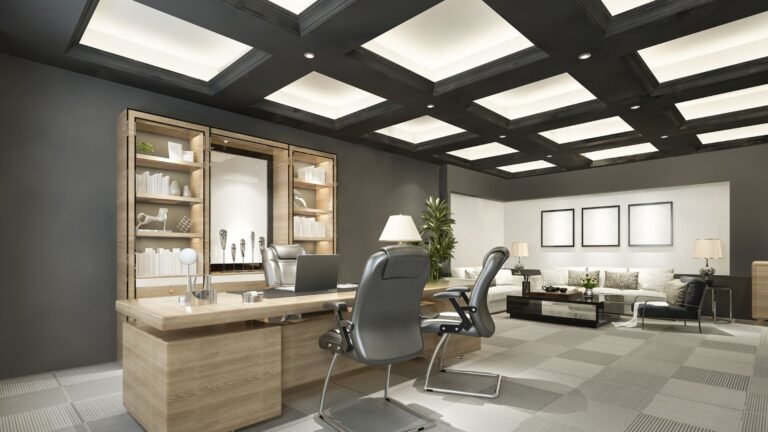
Ready cabins with executive desks
Meeting room tables and seating
Storage units and pedestals
Ergonomics is no longer optional. Businesses expect comfortable seating, correct desk heights, and well-planned circulation areas to support long working hours.
Step 5: Technology and IT Readiness
One of the defining features of a plug-and-play office is immediate operational readiness.
This includes:
Structured data cabling
High-speed internet provision
Wi-Fi access points
Power backup and UPS connections
AV setup for meeting rooms
In BKC, technology readiness is often a decisive factor for tenants, especially in sectors like finance, consulting, IT, and startups.
Step 6: Compliance, Safety, and Approvals
A well-designed office is incomplete without regulatory compliance. Plug-and-play spaces must meet all local safety and building norms.
Key compliance elements include:
Fire safety systems (sprinklers, smoke detectors, extinguishers)
Fire NOC and building approvals
Emergency exits and signage
Accessibility norms
Ensuring compliance not only avoids legal issues but also builds trust with corporate occupiers.
Step 7: Branding and Finishing Touches
Even in a neutral plug-and-play setup, subtle branding adds value.
Common branding elements include:
Reception design with feature walls
Accent colors and textures
Indoor plants and biophilic elements
Breakout zones and informal seating
These finishing touches elevate the overall experience and create a workspace that feels premium yet adaptable.
Step 8: Final Styling and Handover
Before handover, the space undergoes:
Deep cleaning
Lighting and HVAC testing
Furniture alignment
Quality checks
The result is a fully furnished, move-in-ready office where a business can start operations from Day One.
This is the true essence of plug-and-play.
Why Plug-and-Play Offices Are Ideal for BKC
BKC is Mumbai’s most sought-after commercial hub. Businesses here prioritize:
Speed of setup
Professional image
Scalability
Cost predictability
Plug-and-play interiors eliminate long setup cycles and capital expenditure, making them ideal for companies entering or expanding in BKC.
Conclusion
The journey from an empty shell to a plug-and-play office is not just about interiors—it is about creating a ready ecosystem for business growth. With smart space planning, efficient execution, ergonomic design, and regulatory compliance, an unused commercial shell can be transformed into a high-value, income-generating asset.
In premium markets like BKC, where time and perception are critical, plug-and-play office interiors offer the perfect balance of speed, flexibility, and sophistication. Whether for startups, corporates, or investors, this transformation represents the future of commercial workspaces.
A well-executed plug-and-play office does more than fill space—it enables businesses to perform, scale, and succeed from the moment they step in.