
The Foundation of Success: How Material Selection Impacts Safety, Durability, and Brand Image in Commercial Spaces
The Foundation of Success: How Material Selection Impacts Safety, Durability, and Brand Image in Commercial Spaces
In the world of commercial design and construction, the materials chosen are not merely aesthetic finishing touches; they are the silent architects of a business’s operational longevity, safety record, and public perception. For facility managers, developers, and business owners, the decision between marble and laminate, high-grade steel and standard aluminum, or specialized flooring and basic tile is a strategic, high-stakes choice. This decision directly influences three non-negotiable pillars of commercial success: Safety, Durability, and Brand Image.
The Uncompromising Pillar of Safety
The primary responsibility of any commercial space is to ensure the well-being and security of its occupants—employees, customers, and visitors. Material selection is fundamentally tied to regulatory compliance and risk mitigation.
Fire Resistance and Flame Spread
The most critical safety consideration is a material’s reaction to fire. Building codes mandate specific fire ratings for all structural, surface, and finishing materials. Choosing fire-resistant materials, such as treated wood, certain types of brick, or fire-rated drywall, is non-negotiable.
Non-Combustible Materials: Materials like concrete, steel, and stone are naturally non-combustible. However, even steel requires fire-resistant coatings like intumescent paint to prevent it from losing structural integrity under extreme heat.
Flame Spread Rating: Interior finishes like wall coverings and carpets are tested for their flame spread rate. A low-rate material will slow the spread of fire, providing crucial extra minutes for evacuation. Selecting textiles that are inherently fire-retardant or have undergone specialized treatment is vital for soft furnishings in high-traffic areas.
Slip Resistance and Air Quality
Beyond structural safety, day-to-day materials impact user safety and health.
Flooring: The selection of flooring material directly impacts the risk of slips and falls, which are a leading cause of workplace accidents. In wet or high-traffic areas like commercial kitchens, entryways, or restrooms, materials with a high Coefficient of Friction (CoF), such as textured porcelain tiles or specific vinyl flooring, are essential.
Volatile Organic Compounds (VOCs): Indoor air quality is a significant health concern. Paints, adhesives, carpets, and sealants often emit Volatile Organic Compounds (VOCs), which can lead to the ‘sick building syndrome.’ Opting for Low-VOC or Zero-VOC certified materials, such as those meeting LEED or Green Seal standards, safeguards the health of building occupants and aligns with modern sustainability ethics.
The Economic Advantage of Durability
A commercial space is a significant long-term investment. Material durability—the ability to withstand wear, tear, weather, and traffic—directly translates into lower lifecycle costs and a healthier return on investment.
Longevity and Maintenance
High-quality, durable materials may incur a higher initial cost but offer substantial savings over the lifespan of the building by reducing the frequency and cost of maintenance and replacement.
High-Traffic Flooring: In retail or corporate lobbies, low-quality carpet will fray and stain quickly. Investing in durable alternatives like terrazzo, polished concrete, or commercial-grade porcelain ensures a clean, professional look that requires minimal repair, only periodic deep cleaning.
Exterior Cladding: The exterior envelope must withstand environmental stressors, including UV radiation, temperature extremes, and moisture. Choosing weather-resistant materials like high-grade aluminum composites, fiber cement siding, or robust brick/stone masonry prevents costly premature structural failure, cracking, and moisture infiltration.
Abrasive Resistance: Surfaces that interact constantly with people, like countertops, desks, and doors, need exceptional abrasive resistance. Quartz composite or granite countertops are a far more durable choice for a busy cafe or office kitchen than softer, easily scratched materials like laminate.
Resistance to Commercial Cleaning Agents
Commercial environments require rigorous cleaning protocols, often involving harsh chemicals. Materials must be chemically resistant to withstand these powerful agents without discoloration or degradation. For instance, in healthcare or food service, surfaces must be non-porous (like stainless steel or specific solid surface materials) to prevent bacterial growth and allow for effective deep sanitization.
Shaping Perception: Impact on Brand Image
The materials used in a commercial space are a powerful, non-verbal communication tool. They convey the company’s values, quality standards, and overall brand identity to every person who steps through the door.
Conveying Quality and Value
The investment in premium materials is interpreted by clients and customers as an investment in quality and reliability.
Luxury and Exclusivity: Brands aiming for an upscale or luxury image often use materials like polished natural stone (marble, granite), hardwood floors, brass fixtures, and high-thread-count acoustic panels. These choices communicate a sense of permanence, exclusivity, and attention to detail.
Authenticity and Heritage: A brand that values history or craftsmanship might select materials like reclaimed wood, exposed brick, wrought iron, or handcrafted tiles. These elements tell a story, creating a warm, inviting, and authentic atmosphere that fosters a deeper connection with the customer.
Supporting Sustainability and Innovation
In the modern market, a brand’s commitment to the environment is a core component of its image. Material choice is a highly visible way to demonstrate this commitment.
Eco-Friendly Materials: Choosing recycled content steel, bamboo, sustainably harvested wood (FSC-certified), or low-impact carpet made from recycled PET signals environmental stewardship. This resonates strongly with conscious consumers and can be a significant competitive differentiator.
Innovative Aesthetics: Materials that push the boundaries of design, such as smart glass (which changes opacity for light control) or advanced composites, portray the brand as forward-thinking and innovative. This is particularly effective for tech companies or creative agencies.
The Employee Experience
Material choice also shapes the brand’s image internally, impacting employee morale and productivity. Spaces that feel cheap, poorly lit, or acoustically harsh can lead to low job satisfaction. Conversely, incorporating materials that enhance comfort, such as:
Acoustic Panels: To absorb sound in open-plan offices.
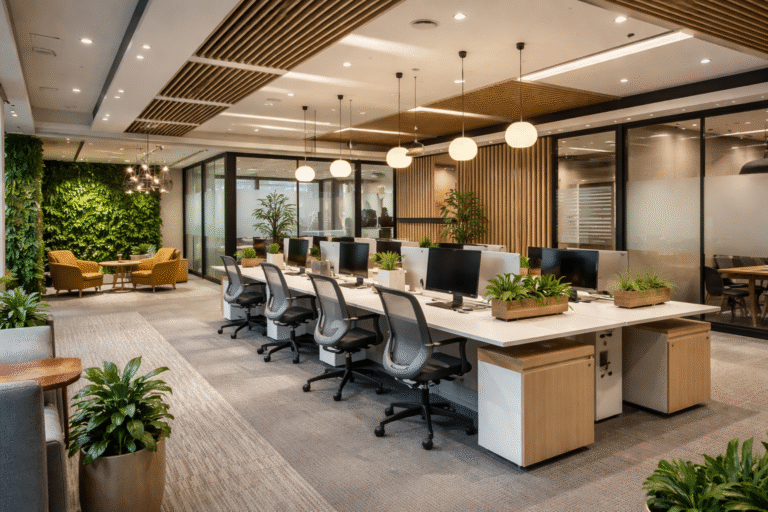
Natural Wood/Stone: To provide biophilic connections to nature.
Ergonomic Flooring: To reduce leg fatigue.
These choices communicate that the company values its employees, reinforcing a positive corporate brand.
Conclusion: The Strategic Imperative of Material Selection
The materials chosen for a commercial space transcend mere decoration; they are the physical embodiment of a business’s operational strategy and values. They represent a critical nexus where initial design concepts are translated into tangible, high-performance realities.
The strategic imperative lies in recognizing that the initial cost of a superior material is an investment that yields substantial returns across three interconnected areas:
Safety: High-quality, tested materials ensure regulatory compliance and risk mitigation, safeguarding occupants through superior fire resistance, better slip ratings, and healthier indoor air quality (low-VOC).
Durability: Investing in robust, high-grade options directly lowers the Total Cost of Ownership (TCO). Durable materials dramatically reduce the frequency and expense of maintenance, repairs, and premature replacement, guaranteeing operational continuity and longevity.
Brand Image: Material choices are a powerful, non-verbal communication tool. Whether conveying luxury through natural stone or responsibility through recycled content, they directly shape public perception, reinforce corporate culture, and enhance the overall customer and employee experience.
Ultimately, successful commercial construction requires moving beyond superficial aesthetics to adopt a holistic, lifecycle-focused approach to material selection. By meticulously balancing the requirements of safety, the economic benefits of durability, and the psychological impact on brand image, businesses can build environments that are not only compliant and cost-effective but also powerful, enduring assets that actively contribute to their success.