The Future of Workplace Design: Hybrid, Flexible & Activity-Based Workspaces
The workplace is going through its biggest transformation in decades. Across industries—tech, corporate, retail, finance, consulting, and co-working—companies are rethinking how their offices should function in an era where people work both remotely and on-site. The traditional, fixed desk-based office is no longer enough. Instead, today’s workplaces must support flexibility, collaboration, agility, digital integration, and employee wellbeing.
This shift has led to three powerful design movements shaping the future of commercial environments: hybrid workplace design, flexible workspace layouts, and activity-based workspaces (ABW). Together, these concepts are redefining how organizations plan, build, and use their physical spaces.
In this blog, we break down what each of these trends means and how they are influencing the next generation of workplace design.
Why the Workplace Needed to Evolve
Before we dive into solutions, it’s important to understand why modern workplaces are changing so rapidly.
1. The rise of hybrid work
Many organizations have shifted to a model where employees choose whether to work from home, office, or both. Offices are no longer “daily workstations”—they are hubs for collaboration, culture-building, and high-value interactions.
2. A demand for more adaptable spaces
Companies grow, reorganize, and re-strategize more frequently than ever. Static offices cannot keep up. Spaces must evolve with team requirements.
3. Increased focus on employee experience
Today’s workforce values mental wellbeing, empowerment, and work-life balance. Workplace design is becoming a direct contributor to employee satisfaction.
4. Technology redefining how work happens
Video conferencing, smart booking systems, AI-driven planning, cloud tools, sensors, and automation systems mean employees can be productive anywhere. The office must support, not restrict, this flexibility.
5. The shift from “me-space” to “we-space”
Organizations now prioritize collaboration over individual desk ownership. Spaces that allow teams to meet, brainstorm, and innovate are more valuable than rows of unused desks.
These drivers have paved the way for hybrid, flexible, and activity-based working environments.
Hybrid Workplace Design: The New Normal
Hybrid workplace design supports employees who split their time between office and remote work. The physical office must complement digital workflows and encourage face-to-face engagement.
Key Characteristics of a Hybrid Workplace:
1. Fewer assigned desks, more shared spaces
Fixed seating becomes unnecessary when employees are not in the office daily. Instead, companies adapt:
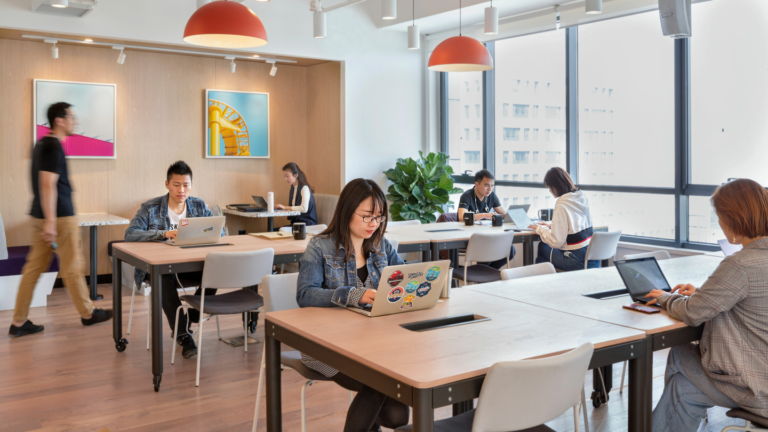
- Hot desks
- Neighborhood seating zones
- Desk booking systems
2. Technology-integrated meeting rooms
Hybrid meetings demand:
- Video conferencing systems
- Soundproofing
- Smart screens
- Wireless presentation tools
- Acoustic panels
3. Collaboration-driven layouts
Spaces must encourage team interactions:
- Huddle zones
- Brainstorm rooms
- Open collaboration pods
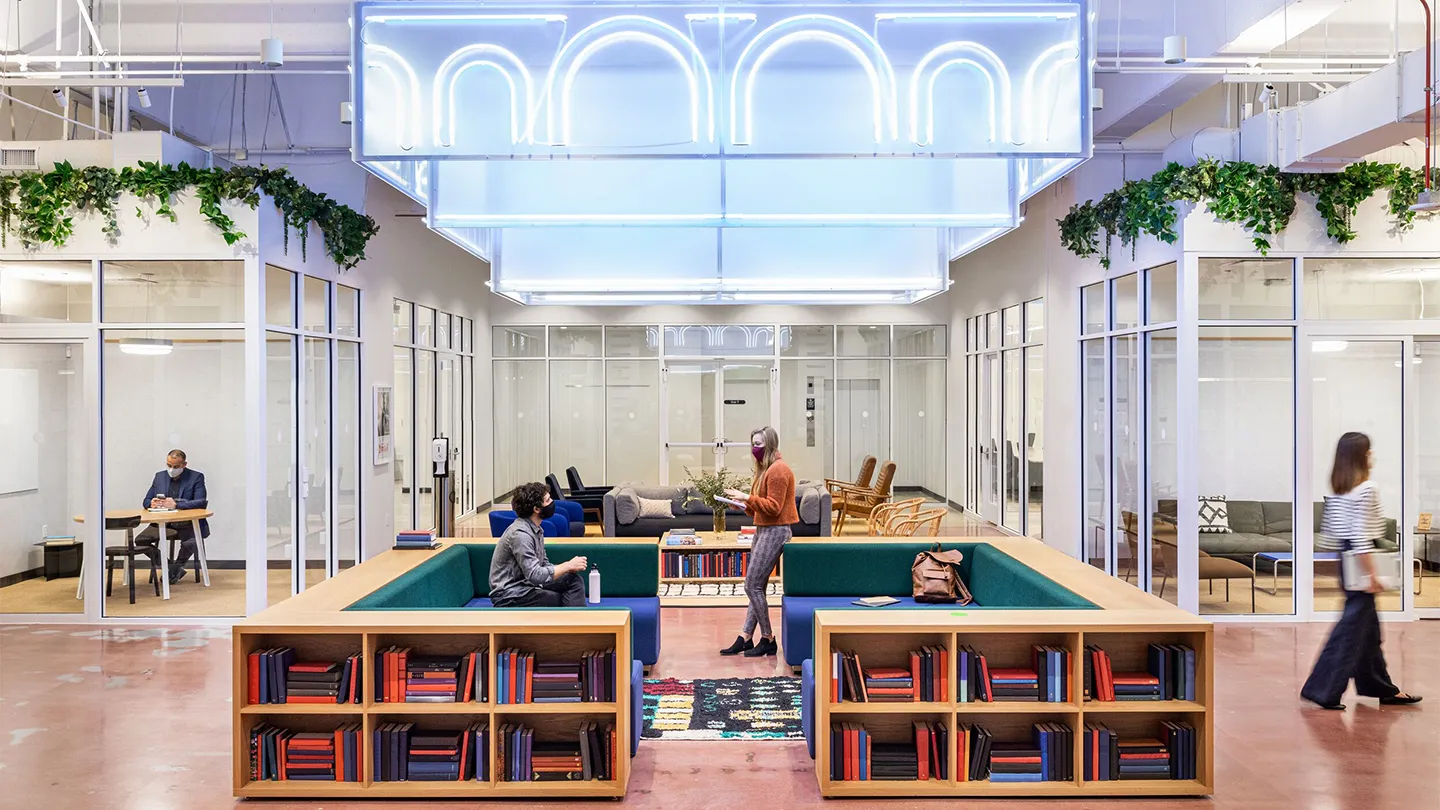
- Lounge seating
4. Social zones as culture hubs
Since employees come to the office mainly to connect, companies prioritize:
- Café-style breakout areas
- Pantry lounges
- Informal meeting corners
The hybrid office is less about daily attendance and more about creating meaningful in-person experiences.
Flexible Workspaces: Designed to Adapt
Flexibility is the foundation of modern commercial interior design. A flexible workspace can be rearranged, resized, or repurposed quickly without expensive renovations.
Key Features of Flexible Workspace Design:
1. Modular furniture
Furniture that can be easily moved or reconfigured helps teams adapt spaces for meetings, training sessions, or individual work.
2. Multi-functional rooms
A single space might function as:
- A meeting room in the morning
- A training area in the afternoon
- A project war room later
3. Demountable partitions
Glass partitions, acoustic dividers, and foldable walls allow dynamic space planning.
4. Mobile power units & wireless systems
Employees can work from anywhere—lounges, café zones, high tables, or phone booths.
5. Future-friendly infrastructure
Offices that grow with the company reduce long-term renovation costs. Flexible planning ensures the workspace stays relevant for years.
Flexibility supports sustainability too—fewer renovations mean reduced material waste and carbon footprint.
Activity-Based Workspaces: Design Tailored to Tasks
An activity-based workspace (ABW) gives employees the freedom to choose where to work based on the task they need to complete. Unlike traditional offices, ABW environments provide a variety of settings for different activities.
Key Zones in an Activity-Based Workspace:
1. Focus zones
Quiet, distraction-free spaces for deep work, reading, or concentrated tasks.
2. Collaboration zones
Open or semi-enclosed areas designed for teamwork, brainstorming, or quick stand-up meetings.
3. Social & breakout zones
Relaxed environments for informal conversations, refreshments, or mental breaks.
4. Phone booths & private pods
Acoustic pods give employees privacy for calls or individual work.
5. Formal meeting rooms
Equipped with digital tools for presentations, video calls, and client meetings.
6. Project rooms
Dedicated spaces where teams can leave ongoing work, research, or physical materials without interruption.
ABW improves productivity because employees can choose the perfect environment for each task.
Benefits of Hybrid, Flexible & Activity-Based Workspaces
Companies that adopt these models see measurable improvements in performance, culture, and operational efficiency.
1. Higher Productivity
Employees have access to purpose-fit spaces, reducing distractions and improving task performance.
2. Better Collaboration
Well-designed work zones encourage spontaneous interactions and teamwork.
3. Increased Employee Satisfaction
People feel empowered when they can choose how and where they work.
4. Optimized Space Utilization
Spaces are used more efficiently, reducing cost per employee.
5. Stronger Company Culture
The office becomes a meaningful place employees want to visit—fostering team bonding and shared identity.
6. Future-Ready Infrastructure
Flexible design reduces renovation needs even when the business evolves.
Key Design Strategies for the Future Workplace
To successfully implement hybrid, flexible, and ABW design principles, consider the following strategies:
1. Human-Centric Design
Place employee wellbeing at the center.
Introduce:
- Ergonomic seating
- Natural light
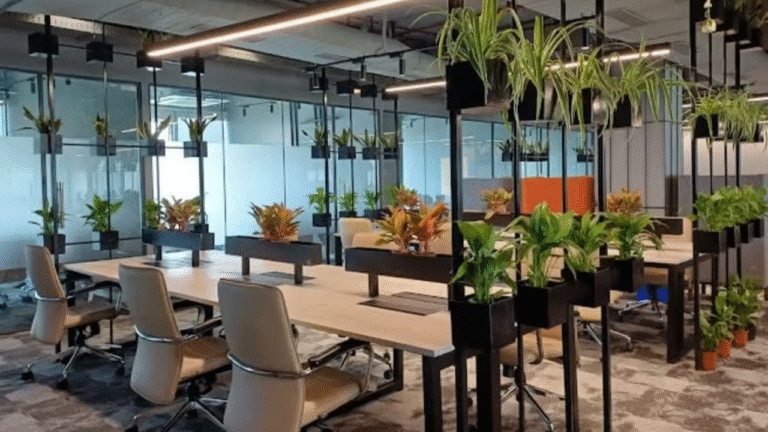
- Biophilic elements
- Improved air quality
- Acoustic comfort
2. Zoning & Space Mapping
Strategically organize space based on tasks, noise levels, and traffic.
3. Technology Integration
Smart workplaces enhance efficiency:
- AI-based desk booking
- Occupancy sensors
- Smart access control
- IoT-enabled HVAC systems
4. Acoustic Comfort
Noise control is essential for productivity:
- Acoustic panels
- Ceiling baffles
- Soft materials
- Sound booths
5. Brand Integration
Reflect the company’s identity through design:
- Colors
- Graphics
- Architectural elements
- Signage
6. Sustainability
Use materials and systems that reduce energy consumption and environmental impact.
What the Future Workplace Will Look Like
Workplaces in the coming decade will be:
1. Experience-Driven
More like social campuses than traditional cubicle offices.
2. Tech-Enabled
AI, automation, VR/AR, and IoT will be deeply integrated.
3. Space-Efficient
Optimized layouts will reduce real estate costs.
4. Wellness-Focused
Design that supports mental and physical health will be standard.
5. Hyper-Flexible
Work environments will adapt instantly to new needs.
The office of the future will not be a place where people have to work—it will be a place where people want to work.
Conclusion
Hybrid, flexible, and activity-based workplaces are transforming the future of commercial design. Organizations that embrace these concepts benefit from improved collaboration, happier employees, better space utilization, and a workspace that evolves with their needs.
As remote work becomes more normalized, the role of the physical office becomes even more meaningful. Thoughtful and strategic design can turn the workplace into a powerful tool for culture, productivity, and business growth.